Building an ADU in Beverly Grove, done the careful way
Beverly Grove's lots are narrow, its streets are walkable, and its homes sit close to neighbors on both sides. An ADU here is less a backyard project and more a planning exercise — fitting a second dwelling into a constrained envelope without weakening the primary house or the block. This guide walks through what owners should expect, from survey to final inspection.
Why building an ADU in Beverly Grove takes a specific approach
Beverly Grove sits between La Brea, Fairfax, Third, and Beverly — a tight, design-aware pocket of the City of Los Angeles with narrow lots, legacy single-family and small multi-family buildings, and blocks where everyone can see into everyone else's yard. An ADU that works here cannot be a catalog plan dropped onto a lot. It has to negotiate setbacks, parking history, tree canopies, utility lines, and neighbor privacy all at once.
The rear yard is never as open as it looks
Sewer laterals, gas lines, mature trees, shared drainage, and legacy accessory structures all fight for the same rear-yard square footage. A current survey and utility locate reveal the real buildable area before drawings are started.
Neighbor impact is part of the design brief
Second-story ADUs and windows on the side property line trigger privacy conversations early. Owners who address massing and window placement during schematic design avoid the kind of late-stage redesign that kills budgets and timelines.
What Beverly Grove owners typically build
Most ADU projects in the neighborhood fall into three patterns, each with its own planning path and construction logic.
Detached rear-yard ADUs
A new small structure at the back of the lot, usually one or two bedrooms, with its own entry, utilities, and kitchen. These are the cleanest ADUs from a permitting standpoint when the lot has enough rear-yard depth to satisfy setbacks and fire separation.
Garage conversions and attached ADUs
Converting a detached garage or adding onto the primary house is common on tighter lots. These need careful structural review, Title 24 compliance, and utility upgrades — but they make better use of existing coverage and often fit where a new detached ADU would not.
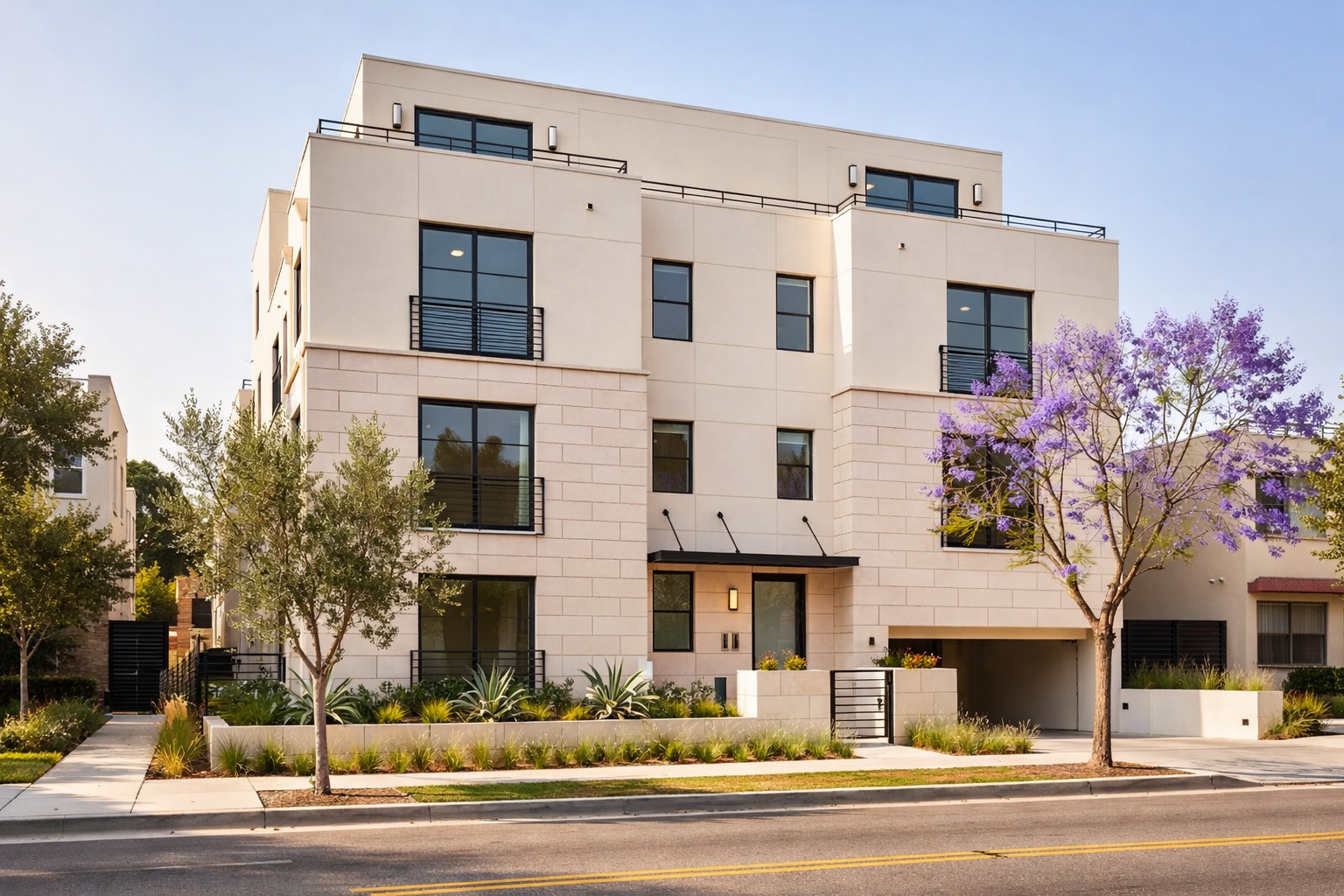
Step-by-step: how a Beverly Grove ADU project actually unfolds
This is the sequence owners should expect. Each step has a specific portal or department, and skipping one usually adds months later.
Land survey by a California-licensed surveyor
Start with a current boundary and topographic survey. Verify the surveyor's license through the California BPELSG license lookup. The survey anchors every setback, utility, and fire-separation decision.
Title and property records search
Pull a preliminary title report and any recorded easements or CC&Rs. Rear-yard utility easements and shared driveways are common in Beverly Grove and they often decide where an ADU can actually sit.
Zoning and parcel lookup via ZIMAS
Check the parcel on ZIMAS for zone, height district, and HPOZ/overlay flags. Cross-reference with the Los Angeles Planning zoning search and the California HCD ADU resource.
Prior permit history and document search
Pull the property's permit record through the LADBS building permits portal. Unpermitted additions on Beverly Grove properties are common and must be resolved before a new ADU permit moves forward.
Schematic design and plan development
Convert survey, title, and zoning inputs into a schematic, then into a full permit drawing set: site plan, floor plan, elevations, structural, Title 24 energy, and MEP coordination for a separate unit.
Pre-submittal meeting with Planning
When the ADU approaches setback limits or involves an overlay, request a pre-submittal through Los Angeles Planning zoning review. It is the cheapest way to confirm the scope is actually buildable.
Permit application and plan check via ePlanLA
File through ePlanLA, LADBS's electronic plan check portal. The LADBS homeowner step-by-step is the clearest first-pass roadmap. Respond to corrections thoroughly; partial answers trigger another round.
Permit issuance and sub-permits
Once plan check clears and fees are paid, the building permit issues. The contractor then pulls electrical, plumbing, and mechanical sub-permits — essential for the inspection record and final sign-off.
Inspections during construction
Expect foundation, framing, rough MEP, insulation, drywall, and sub-trade inspections. ADU inspections can be scheduled independently from the primary house when the project is clearly scoped that way.
Final inspection and Certificate of Occupancy
Once all trades pass final, LADBS issues final sign-off. A Certificate of Occupancy for the new dwelling unit closes the record and protects future rental or resale status.
What makes a Beverly Grove ADU feel like it belongs on the lot
The strongest ADUs in this neighborhood do not look like objects parked behind the main house. They look like part of a considered property.
Roofline, eave, and window logic
When the ADU's roof pitch, eave depth, and window proportions echo the primary house, the two buildings read as family rather than strangers. Material and color choices then carry much less of the burden.
Landscape as connective tissue
Paving, planting, and screening are how the ADU becomes part of the property rather than an isolated pod. Good planning treats the yard between the two buildings as its own outdoor room.
Jurisdiction resources: City of Los Angeles & California HCD
For the full step-by-step sequence, start with the Los Angeles construction planning-process guide. Beverly Grove is inside the City of Los Angeles, so LADBS and LA Planning are the authoritative local path. Pair them with California HCD guidance to understand what state law protects even when local rules are ambiguous.
LADBS & LA Planning
Use these for the permit roadmap, zoning lookup, and ePlanLA submission route.
California HCD — statewide ADU rules
Use HCD's ADU resource page to understand the state law baseline, including unit size, setback, and parking waivers.
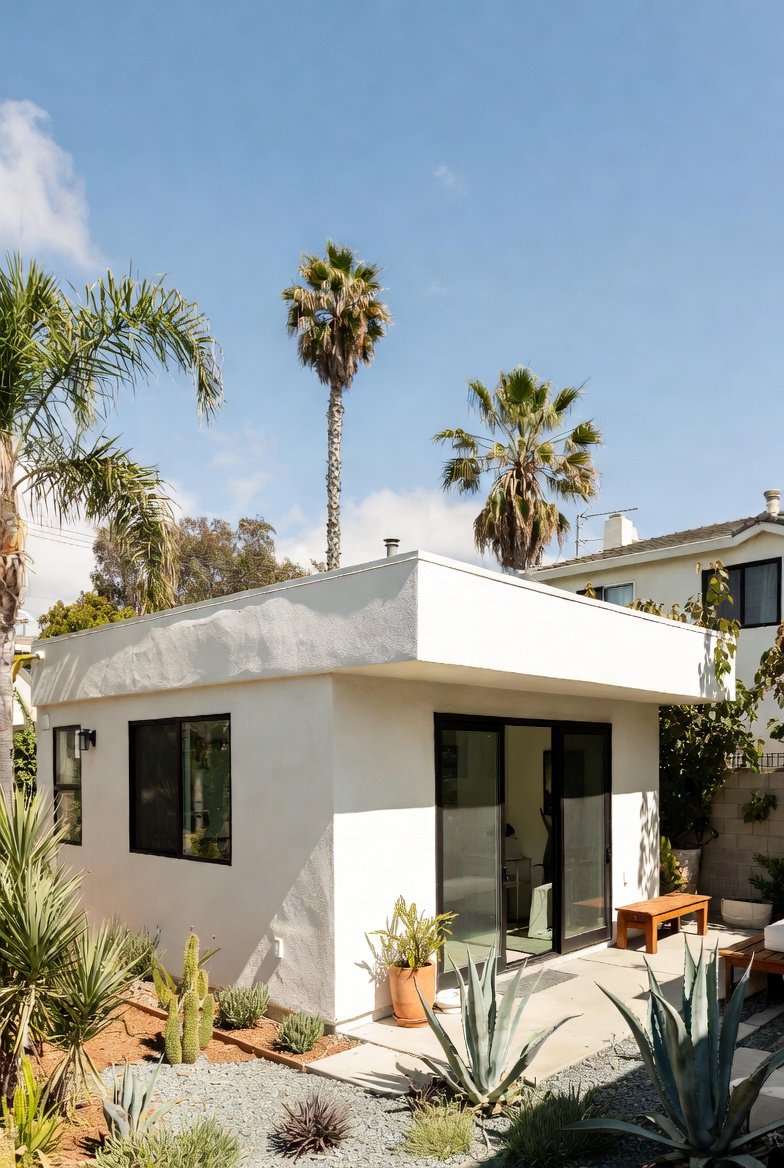
Common mistakes Beverly Grove owners make building an ADU
Most of the painful ADU stories on these blocks come from the same handful of avoidable planning errors.
Designing before verifying the lot
Picking a plan before pulling a survey, title, and ZIMAS report is how owners end up redrawing their ADU three times. The buildable envelope on a Beverly Grove lot is almost always smaller than it looks.
Ignoring utilities and fire separation
Sewer depth, panel capacity, and fire-separation rules between the main house and ADU drive cost and feasibility as much as square footage does. Skipping the utility conversation early creates expensive surprises at framing.
Frequently asked questions
The questions Beverly Grove owners ask most often before committing to a full ADU scope.
Yes. Most single-family and multi-family lots qualify for at least one ADU under state law, subject to setbacks and plan check. Confirm the parcel on ZIMAS first.
Generally up to 1,200 sq ft detached, with smaller limits for attached and JADU conversions. Actual limits depend on the parcel and overlays.
Often no — state law waives parking in many cases, including properties within half a mile of transit. Verify the waiver applies before relying on it.
Not uniformly. ZIMAS will flag HPOZ, specific-plan, and overlay conditions by parcel. Always check before assuming a by-right ADU path.
State law sets tight review deadlines, but real-world timelines depend on corrections. Filing through ePlanLA keeps the process more predictable than paper routes.