A second home. Same lot.
Whether it's a standalone backyard studio, an attached unit with its own entrance, a garage turned into a light-filled guesthouse, or a two-story rear-yard home — Onyx designs and builds ADUs that feel as deliberate as the main house and as useful as a second address.
The home you want is already on your lot
California state law now entitles nearly every residential parcel in Los Angeles to at least one ADU and one Junior ADU. The question has shifted from whether you can build one to which kind makes the most of your site.
The ADU has to belong to the property
An ADU that reads as a shed — mismatched roofline, wrong stucco texture, awkward window proportions — diminishes the whole property. Onyx treats coherence with the main house as a design priority, not an afterthought. Every ADU is drawn so it sits on the lot like it was always meant to be there.
Feasibility and placement come first
Los Angeles has some of the most varied residential lots in the country — narrow corridors, hillside grades, alley access, fire zones, historic overlays. Onyx walks the site and assesses setbacks, lot coverage, utility locations, and existing structures before design begins, so no planning effort is wasted.
What kind of ADU?
Six paths, one decision. Each type carries a different permitting route, construction sequence, and design opportunity. Read them as a starting point — the conversation about which one fits your lot happens in the first meeting.
Detached ADU
A freestanding structure in the rear or side yard, independent from the main home, with its own entrance, kitchen, and bathroom. The most flexible of the six — and the one that usually delivers the most privacy on both sides and the most freedom in design.
Attached ADU
An addition to the existing home that shares at least one wall but functions as a fully independent unit with its own entrance, kitchen, and bath. Good for narrower lots that can't support a detached footprint, and for homeowners who want the unit close for family use.
Garage Conversion ADU
Converting an existing detached or attached garage into a livable ADU. Typically the fastest permitting path because the foundation and footprint already exist. A strong first choice for homeowners who want to move quickly, especially on lots with alley access.
Junior ADU (JADU)
A unit of up to 500 square feet carved out of the existing home's footprint, with its own entrance and an efficiency kitchen. The JADU can be built alongside a detached ADU on the same lot — doubling the living arrangement without losing the main home.
Two-Story ADU
A multi-level detached ADU that uses vertical space where the lot can't offer horizontal room. Often the only way to get a full second bedroom on a shallow rear yard, and a strong option where neighboring sightlines and privacy can be carefully managed.
Multifamily Property ADU
California law also allows ADUs on multifamily lots — duplexes, triplexes, and small apartment buildings. Depending on the site, multiple detached ADUs or converted non-livable spaces (storage, laundry rooms, basements) can be added alongside the existing units.
Most ADUs are won or lost before the first shovel
Lot placement, unit sizing, privacy sightlines, utility routing, permit strategy — these are the decisions that shape how an ADU lives for the next thirty years. Our ADU design-and-planning walkthrough covers how Onyx handles each one, in Los Angeles terms.
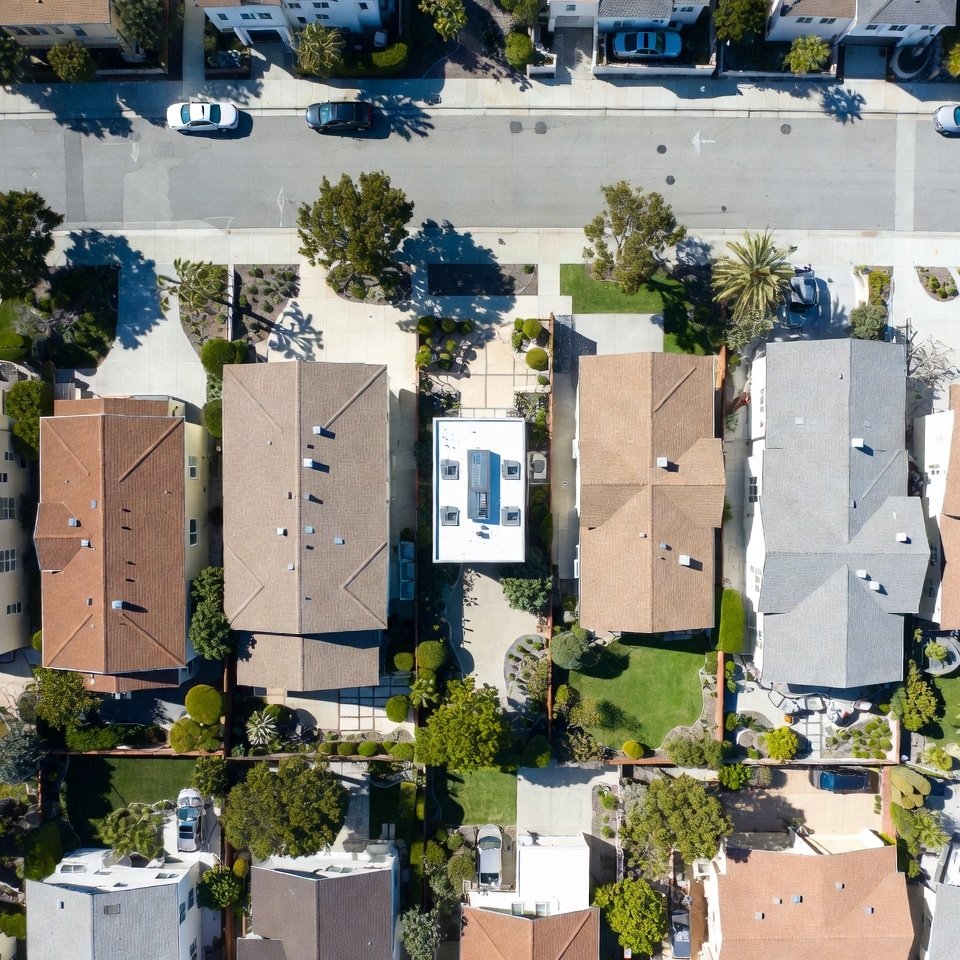
Where it sits on the lot matters as much as what it is
A well-placed ADU reads as a second building on a considered property. A poorly-placed one reads as a shed. The difference is usually five or six feet — a setback re-read, a door rotated ninety degrees, a window moved so it doesn't stare into the neighbor's kitchen.
Onyx treats the site plan as architecture, not just a compliance drawing. Privacy sightlines, how the unit lands in relation to the existing home, where the utility runs enter, where the kitchen window faces at 5 p.m. — these are design decisions that shape how livable the ADU will actually be.
We have built across Cheviot Hills, West Los Angeles, Mar Vista, Culver City, Sherman Oaks, Pico-Robertson, and Silver Lake — lot conditions vary enormously, and the placement strategy changes with each one.
What every ADU project includes
Onyx manages the full scope — from initial feasibility through final inspection. One team, one contract, one accountability.
Feasibility & site plan
Lot setbacks, coverage, easements, utility locations, and existing structural conditions — assessed before any design work begins.
Design & plans
Architectural drawings, material palette, and unit layout developed in collaboration with your vision and submitted for permit approval.
Permits & utilities
LADBS permits, Planning clearances, and utility separations — water, sewer, gas, and electrical — coordinated with LADWP and the Bureau of Sanitation.
Construction & finish
Foundation, framing, rough trades, drywall, finish, and final inspection — managed by a single project lead through punch-list and walk-through.
From first walk-through to handed keys
The decisions made before a shovel goes in the ground determine more of the outcome than anything that happens after.
Walk the lot
Before design, we walk your property to assess setbacks, rear-yard depth, utility locations, existing garage condition, tree preservation, and privacy sightlines. The site tells us which ADU type the lot actually wants.
Design for the way you'll use it
Family housing, a studio for work, a long-term rental, a guest suite. The program shapes the layout. A 750-square-foot rental and a 750-square-foot guesthouse look completely different in plan — even on the same lot.
Permit and plan-check
We submit to LADBS, handle plan-check corrections, and coordinate with Planning and utilities. California state ADU law caps review timelines, so a clean submission stays on a known schedule.
Build and deliver
Foundation, framing, rough trades, drywall, tile, cabinets, paint, final inspection. One site supervisor through the full build. Keys handed over with a punch-list walkthrough and a finish binder.
Why homeowners across Los Angeles choose Onyx for their ADU
ADUs look simple on a site plan. The ones that hold up over ten years are the ones built with the same rigor as the main house — not as a shed with plumbing.
LA permit path expertise
Los Angeles permit review has a specific rhythm for ADU applications — which reviewer pulls it, what corrections are common, where the timeline stalls. Onyx submits clean packages that move through plan-check on the first or second cycle, rather than the fourth.
One team, design through finish
The team that draws the ADU is the team that frames it, finishes it, and hands you the keys. No handoff between firms. No drawings that don't survive contact with the site. No redesigns during construction.
Built like the main house
Foundation spec, framing, insulation detail, window quality, plumbing fixtures, tile setting, cabinet build — held to the same standard as the primary residence. The ADU should feel like part of the property, not an outbuilding.
Common questions about building an ADU in Los Angeles
Yes. Every ADU requires permits through LADBS plus plan-check clearances from Planning. Under California state ADU law, most single-family lots are entitled to at least one ADU and one Junior ADU — but the permits still have to be pulled. Onyx handles the full submission.
Most single-family and many multifamily lots are entitled to at least one ADU under California state law. Hillside lots, Very High Fire Hazard Severity Zones, and historic overlay districts carry additional requirements. Onyx evaluates feasibility before design work begins — so no planning effort is wasted on a site that can't support the unit.
A detached ADU typically takes four to seven months of construction from permit approval. A garage conversion is often three to five months. Permitting itself adds roughly two to four months on top, depending on jurisdiction, site complexity, and any special clearances required.
Long-term rentals (30 days or more) are protected statewide. Short-term rentals are more restrictive; LA proper limits them to primary residences and most other cities have similar rules. Onyx can advise on compliant rental scenarios during the design phase.
It depends on the existing electrical panel capacity, sewer line condition, and water service size. A panel upgrade, sewer tie-in trench, or water-meter separation may be required. Onyx evaluates all three during feasibility so the plan reflects what the site can actually carry.
For most detached ADUs and garage conversions, yes. The work is physically separated from the main residence and staging is managed to minimize disruption. For attached ADUs or Junior ADUs carved from the existing home, some temporary accommodation of access may be required.
Ready to see what your lot can hold?
Most ADU projects begin with a walk-through of the property and a conversation about how the space will be used. Onyx can evaluate feasibility and sketch a rough placement before any plans are drawn or commitments are made.