Home addition planning in Santa Monica, with the coastal details handled
Santa Monica's lots are small, its coastal zoning is real, and its Plan Review process is distinct from LA's. A home addition here benefits from an early feasibility pass that confirms coastal status, setback envelope, and existing permit history before design locks in. This guide walks through how the process actually unfolds.
Why home addition planning in Santa Monica takes a specific approach
Santa Monica combines small lots, older housing stock, coastal-zone conditions on a share of parcels, and a city staff that takes design and compatibility seriously. A home addition here isn't an LA project in disguise — it has its own review path, its own submittal conventions, and its own sensitivities.
Coastal Zone status is the first question
Some parcels sit inside the Coastal Zone where additional development review can apply. Confirm coastal status before design starts.
Lot envelopes are tighter than they look
Setback, coverage, and FAR math on a Santa Monica lot rarely leaves room for a large addition without careful design. A pre-submittal check saves time later.
What Santa Monica owners typically add
Most addition projects in the city cluster around a few patterns.
Rear primary-suite or family-room additions
A new primary suite or expanded family room at the back of the house, fitting within coverage and setback limits.
Partial second-story additions
Where the lot can't accept more ground-floor coverage, owners go vertical. Foundation capacity, height district, and neighbor sightlines all come into play.
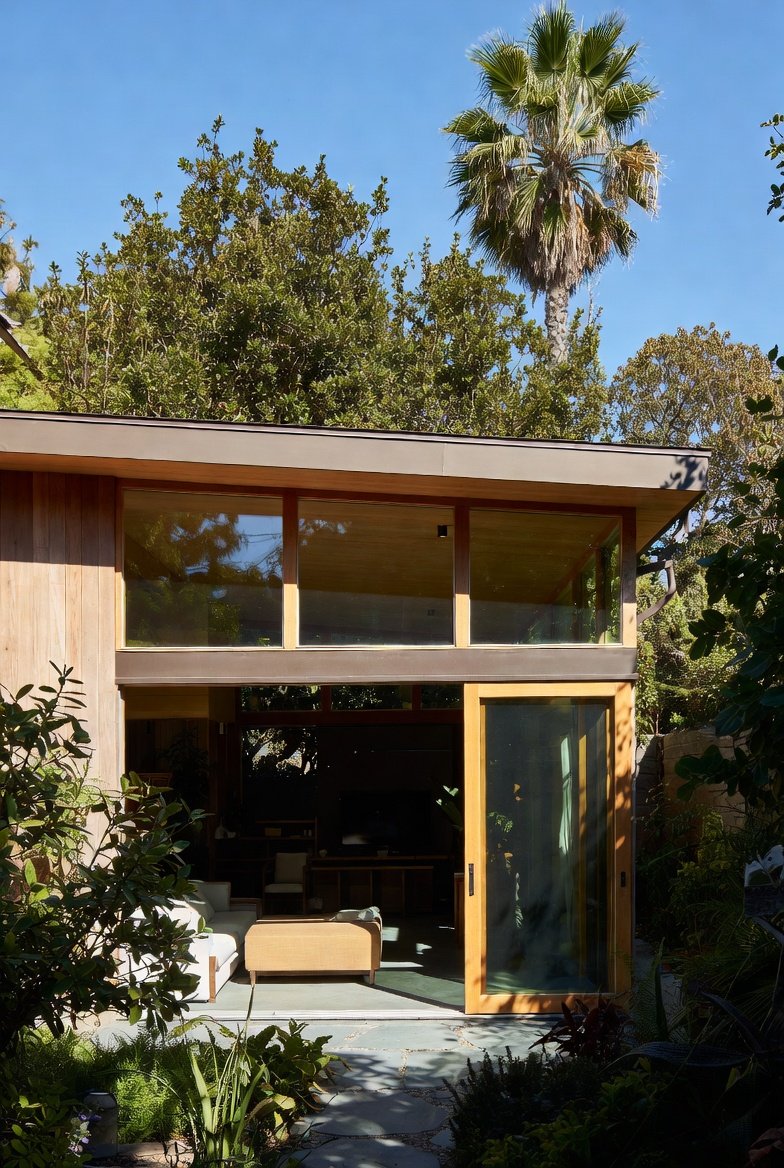
Step-by-step: how a Santa Monica home addition actually unfolds
The sequence owners should expect, each step tied to the correct department or portal.
Licensed land survey
Start with a current boundary and topographic survey. Verify the surveyor through the California BPELSG license lookup.
Title and property records
Pull a preliminary title report and any recorded easements. Many Santa Monica parcels carry shared driveways and legacy conditions.
Zoning, coastal, and parcel lookup
Confirm zone, setbacks, coastal status, and overlays with Santa Monica Plan Review.
Prior permit history
Pull the permit record through the Permit Services Center. Unpermitted prior work has to be resolved before a new addition permit issues.
Schematic design and plan development
Turn survey, title, and zoning inputs into a schematic, then into a full permit drawing set: site plan, floor plans, elevations, structural, Title 24 energy, and MEP.
Pre-submittal / how-to-submit review
Use the city's how-to-submit guide to confirm the package meets submission requirements before filing. Coastal parcels add a review layer here.
Permit application and Plan Review
File through Santa Monica Plan Review. Complete responses to corrections shorten the total cycle.
Permit issuance and sub-permits
After plan check clears and fees are paid, the building permit issues. The contractor pulls separate electrical, plumbing, and mechanical sub-permits.
Inspections during construction
Expect inspections at foundation, framing, rough MEP, insulation, drywall, and trade sign-offs. Santa Monica inspectors coordinate their own schedule.
Final inspection and Certificate of Occupancy
Once all trades pass final and Title 24 verification clears, the city issues final sign-off. For additions that change habitable area, a Certificate of Occupancy closes the record for resale and refinance.
What makes a Santa Monica addition feel like part of the house
The strongest additions read as if the house was always meant to be this size.
Match rooflines and window proportions
Matching roof pitch, eave depth, and window rhythm is what makes an addition read as continuation rather than appendage.
Resolve transitions between old and new
Hallway junctions, change-of-level moments, and doorway reveals between original and addition are where the integration succeeds or fails.
Jurisdiction resources: Santa Monica
For the full step-by-step sequence, start with the Santa Monica construction planning-process guide. Santa Monica is its own jurisdiction — use Plan Review and the Permit Services Center for any addition inside city limits.
Santa Monica Plan Review
Overall plan review process, submittal guide, and Permit Services Center.
Common mistakes Santa Monica owners make on home additions
Most painful stories come from treating the process like LA's or missing the coastal question.
Filing to the wrong jurisdiction
Santa Monica is not LA. ePlanLA and LADBS don't apply. Plan Review is the correct route.
Missing the coastal question
Assuming a by-right path on a coastal parcel without confirming coastal status is how timelines slip. Check at the zoning stage.
Frequently asked questions
What Santa Monica owners ask most often before committing to an addition scope.
Yes. Any footprint change or structural/MEP work needs a permit from Santa Monica Plan Review.
On some parcels, yes. Confirm coastal status during the early zoning lookup.
Depends on completeness. Coastal or discretionary approvals add time.
For most additions, yes. A current licensed survey anchors every later decision.
New square footage is typically reassessed at the added value, not the full property.