Major home addition planning in Los Angeles, without the guesswork
A major home addition in Los Angeles is not just a construction project. It is a planning project first — a sequence of surveys, records, zoning confirmations, and drawing packages that have to be resolved before a shovel moves. This guide walks through how the process actually unfolds for owners across the City of LA, from the first property records pull to the final sign-off.
Why major home addition planning in Los Angeles requires a specific approach
Los Angeles is a patchwork of zoning overlays, hillside conditions, historic districts, coastal zones, and legacy lots that rarely match their paper record. An addition that sounds simple — a new primary suite, a back-of-house expansion, a second story over an existing footprint — can trigger setback recalculations, FAR checks, sloped-lot calculations, and Planning review long before LADBS accepts the building permit package.
The lot is the first real constraint
Most LA neighborhoods have tight street frontages, legacy easements, and unpermitted work layered over decades. A good survey and a clean records pull will surface the real buildable envelope before drawings lock in a footprint that cannot be permitted.
Neighbor sensitivity is a planning issue, not a social one
On narrow lots and close-in blocks, privacy, shading, and view lines become part of the planning conversation. Window placement, balcony depth, and second-story massing all affect how the project is read by neighbors and, when notice is required, by Planning itself.
What Los Angeles owners typically add
Home addition projects in LA tend to cluster around the same handful of goals, but each one has its own planning path.
Primary-suite and family-room expansions
Owners often add a rear primary suite, a larger kitchen, or a combined family-dining volume at the back of the house. These additions usually fit within the existing footprint logic but still require setback confirmation, FAR math, and a clean structural tie-in to the original framing.
Second-story and bump-out additions
Where lot coverage is already tight, owners go vertical. Second-story additions bring height-district limits, shadow impacts, foundation upgrades, and Title 24 energy review into the conversation. A pre-submittal meeting with Planning is usually worth the hour.
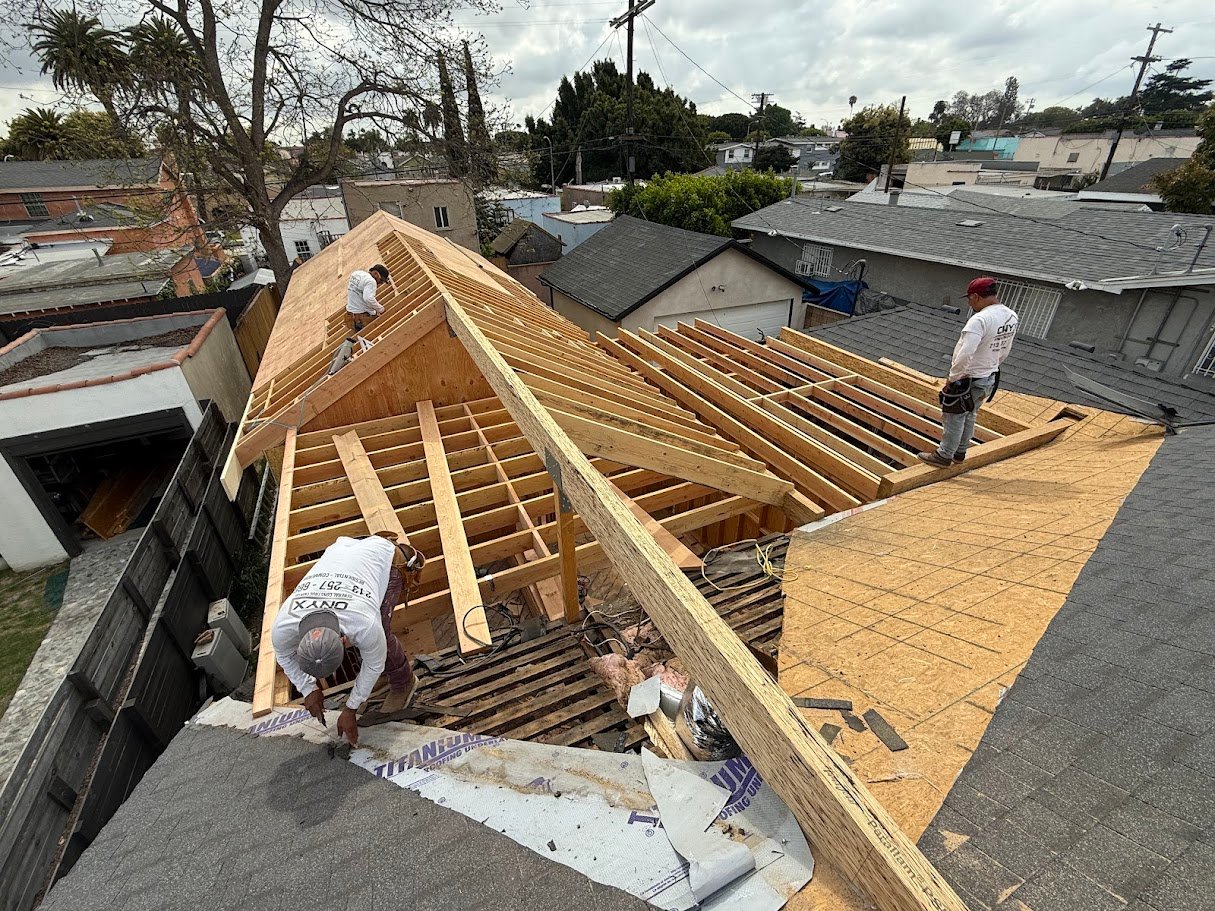
Step-by-step: how a major home addition in Los Angeles actually unfolds
This is the sequence owners should expect — from first property read to final Certificate of Occupancy. Each step has a specific portal, department, or document that moves the project forward.
Land survey by a California-licensed surveyor
Begin with a current boundary and topographic survey. Confirm the surveyor is active through the California BPELSG license lookup. The survey locks in boundaries, easements, and existing conditions that every later drawing depends on.
Title and property records search
Pull a preliminary title report and any recorded easements or CC&Rs. These often reveal utility easements, shared driveways, or side-yard restrictions that change where an addition can land on the lot.
Zoning and parcel lookup via ZIMAS
Use ZIMAS to confirm the zone, height district, overlays, and any HPOZ or specific-plan flags. Cross-check against the Los Angeles Planning zoning search.
Prior permit history and document search
Pull the property's permit history through the LADBS building permits resources. Unpermitted prior work is one of the most common sources of plan-check delay and must be resolved early.
Schematic design and plan development
Translate the survey, title, and zoning inputs into a schematic design, then into a full permit drawing set — site plan, floor plans, elevations, sections, structural, Title 24, and MEP coordination.
Pre-submittal meeting with Planning
For anything that touches zoning adjustments, hillside rules, or overlay review, request a pre-submittal with Los Angeles Planning zoning review before plan check. This is where scope is reality-tested.
Permit application and plan check via ePlanLA
Submit the full package through ePlanLA, LADBS's electronic plan check portal. Use the LADBS homeowner step-by-step as the clearest first-pass roadmap. Expect correction cycles; respond thoroughly, not quickly.
Permit issuance and sub-permits
After plan check clearance and fee payment, the building permit issues. The contractor then pulls separate electrical, plumbing, and mechanical sub-permits so the inspection record is clean at final.
Inspections during construction
Required inspections typically include foundation, framing, rough MEP, insulation, drywall, and each sub-trade's own sign-offs. Missing an inspection sequence is one of the most expensive mistakes in LA work.
Final inspection and Certificate of Occupancy
Once all trades pass final and Title 24 verification clears, LADBS issues final sign-off. For additions that create new dwelling area, a Certificate of Occupancy closes the record and protects resale value.
What makes a Los Angeles addition feel like part of the original house
The best additions in LA do not announce themselves. They read as though the house was always meant to be this size — because the planning phase respected the original geometry, roof lines, and street-facing composition.
Proportion before ornament
A well-planned addition gets the eave height, plate height, and window rhythm right before anyone talks about finishes. When those proportions match the original, even a large expansion reads as quiet rather than tacked on.
One material story, not two
Owners often lose the project at the material stage — mixing stucco eras, switching window profiles, or adding a roof material that does not exist anywhere else on the house. Deciding on one disciplined palette during design, not during construction, is what makes the finished result feel cohesive.
Jurisdiction resources: City of Los Angeles
For the full step-by-step sequence, start with the Los Angeles construction planning-process guide. For properties inside the City of LA, use LADBS and Los Angeles Planning as the authoritative path. Confirm jurisdiction on ZIMAS before assuming — pockets of unincorporated LA County and adjacent cities sit right against city boundaries.
LADBS — permits & plan check
Start here for the homeowner roadmap, building permit resources, and the ePlanLA electronic plan check route.
Los Angeles Planning & zoning
Use ZIMAS for parcel-level zoning, then the Planning site for zoning review and approvals when the project needs more than a by-right path.

Common mistakes Los Angeles owners make when planning a major addition
These are the patterns that turn a clean scope into a long correction cycle. Most of them are avoidable with better sequencing during the planning phase.
Designing before pulling records
Starting schematic design before a current survey, title report, and ZIMAS pull is the most common reason an addition has to be redrawn. Setback, easement, and overlay surprises should show up in the first week of planning, not in the third round of plan check.
Ignoring unpermitted prior work
Many LA homes carry partially permitted or fully unpermitted additions from previous owners. Those conditions have to be resolved — legalized, removed, or documented — as part of the new permit. Pretending they do not exist is how projects get red-tagged at framing.
Frequently asked questions
Short, practical answers to what Los Angeles owners ask most often before starting a major addition.
Yes. Any addition that adds area or alters structure, MEP, or life-safety systems requires a building permit from LADBS, and often a zoning review through LA Planning.
Most additions move through several correction cycles over several months. Projects with zoning adjustments or Planning approvals add time. ePlanLA keeps the document trail cleaner than paper routes.
For most meaningful additions, yes. A current survey from a California-licensed surveyor establishes the constraints that drive setbacks, height, and structural design.
Zoning review confirms use, setbacks, height, FAR, and overlays. A building permit confirms the drawings meet code. Most additions need both cleared before issuance.
Only after the permit issues and sub-permits are pulled. Starting earlier risks stop-work orders and rework. Once issued, inspections are scheduled at each milestone through final.