Construction Phases Los Angeles | Real Build Photo Guide | Onyx General Construction
Proof in Progress

What the work actually looks like.

This page is a phase-by-phase record of real Onyx work across Los Angeles. Not isolated finish shots, and not just the polished end result — the actual sequence of demolition, structure, waterproofing, rough systems, finish build-out, and final completion.

Real field photography Structural through finish work Additions, ADUs, and remodels Proof in the process
What you are seeing is the work between the before and after. The finished rooms only land because the earlier phases were built and coordinated correctly.
An Inside Look

A page built around the work, not just the reveal

These images are here to show the depth of the work behind the finished result. Whether the property is in Santa Monica, Brentwood, Hancock Park, Mar Vista, or Los Feliz, the same pattern holds: strong finished rooms come from disciplined execution long before the finish materials arrive.

The finished look is only one part of the story

The point of this page is not just to explain the sequence. It is to let the work speak through the sequence. Demolition, excavation, rebar, framing, waterproofing, rough systems, drywall, tile prep, and final finishes all leave a record of capability when they are documented clearly.

What this shows Real progression from structural work to completion
Depth of scope Site work, structure, systems, finishes, and closeout
Why it matters The strongest finished work is earned in the earlier phases
What it avoids A portfolio made only of after photos with no proof underneath

Move through the work phase by phase

You can move straight through the sequence or jump to the phase you care about most. The point is to show how much real work sits behind the finished image at the end.
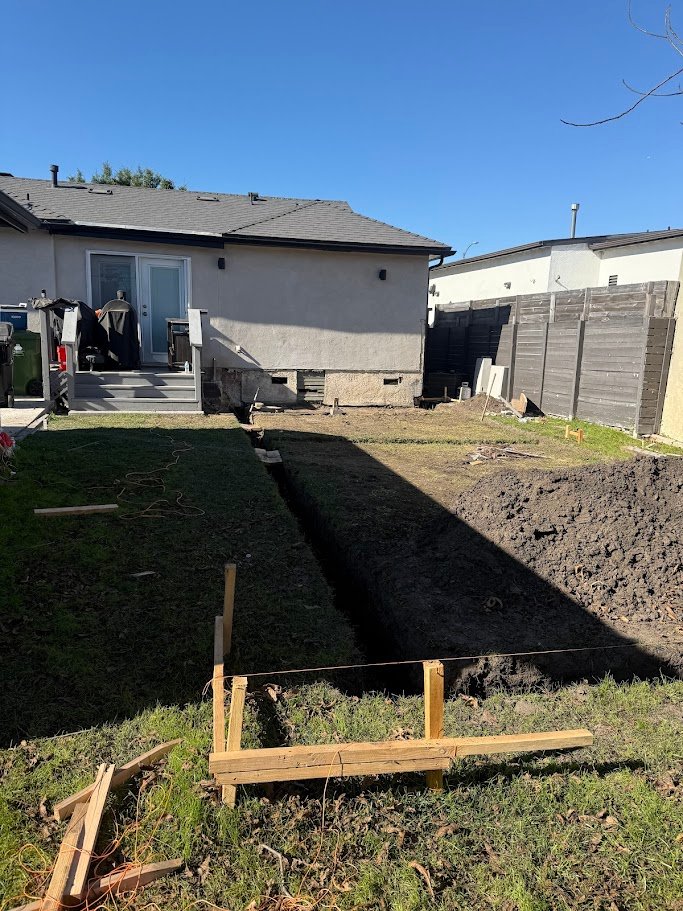
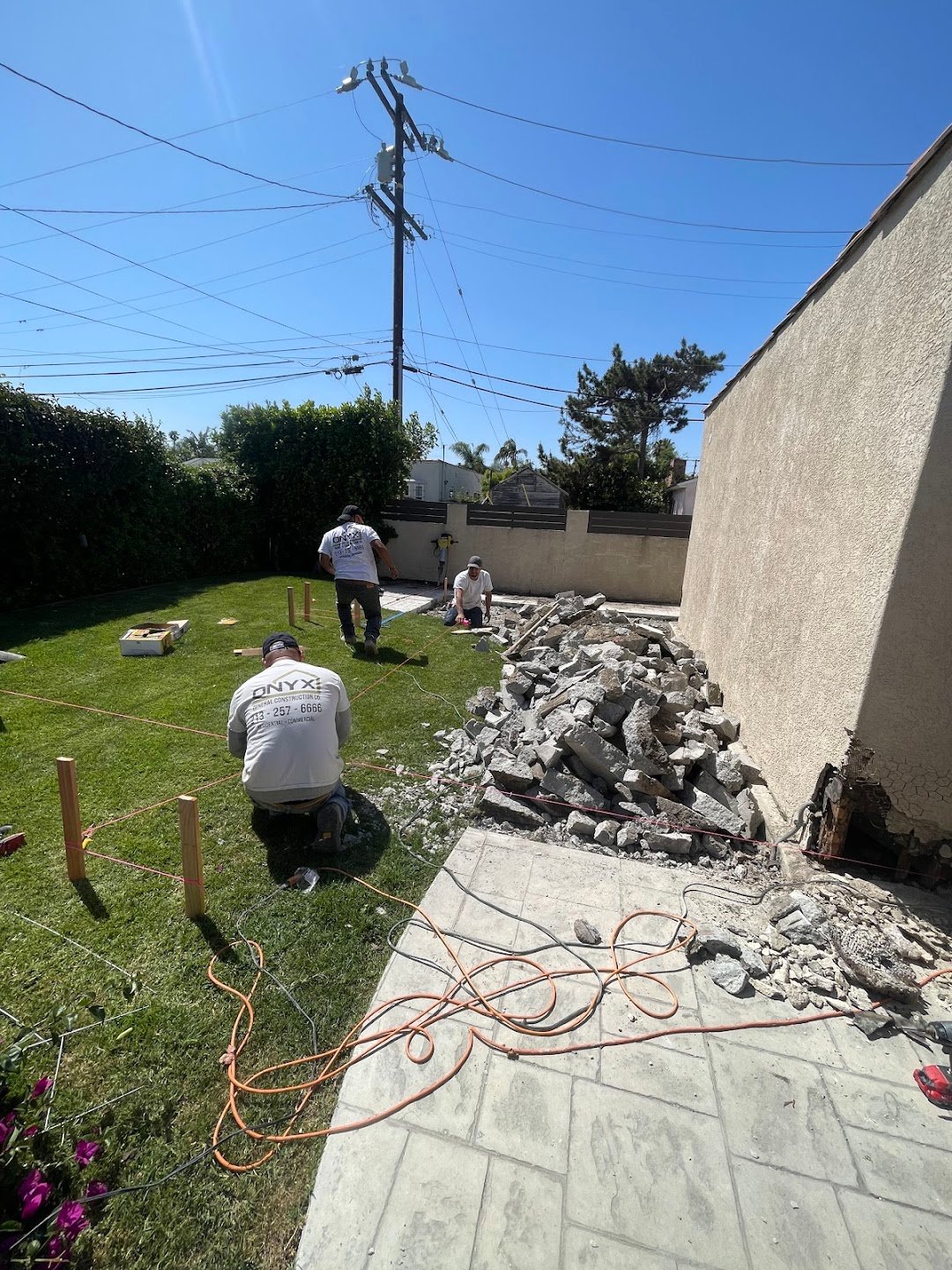
Backyard trenching and preparation for a Los Angeles addition foundation.
Trenching and early site prep set the work zone.
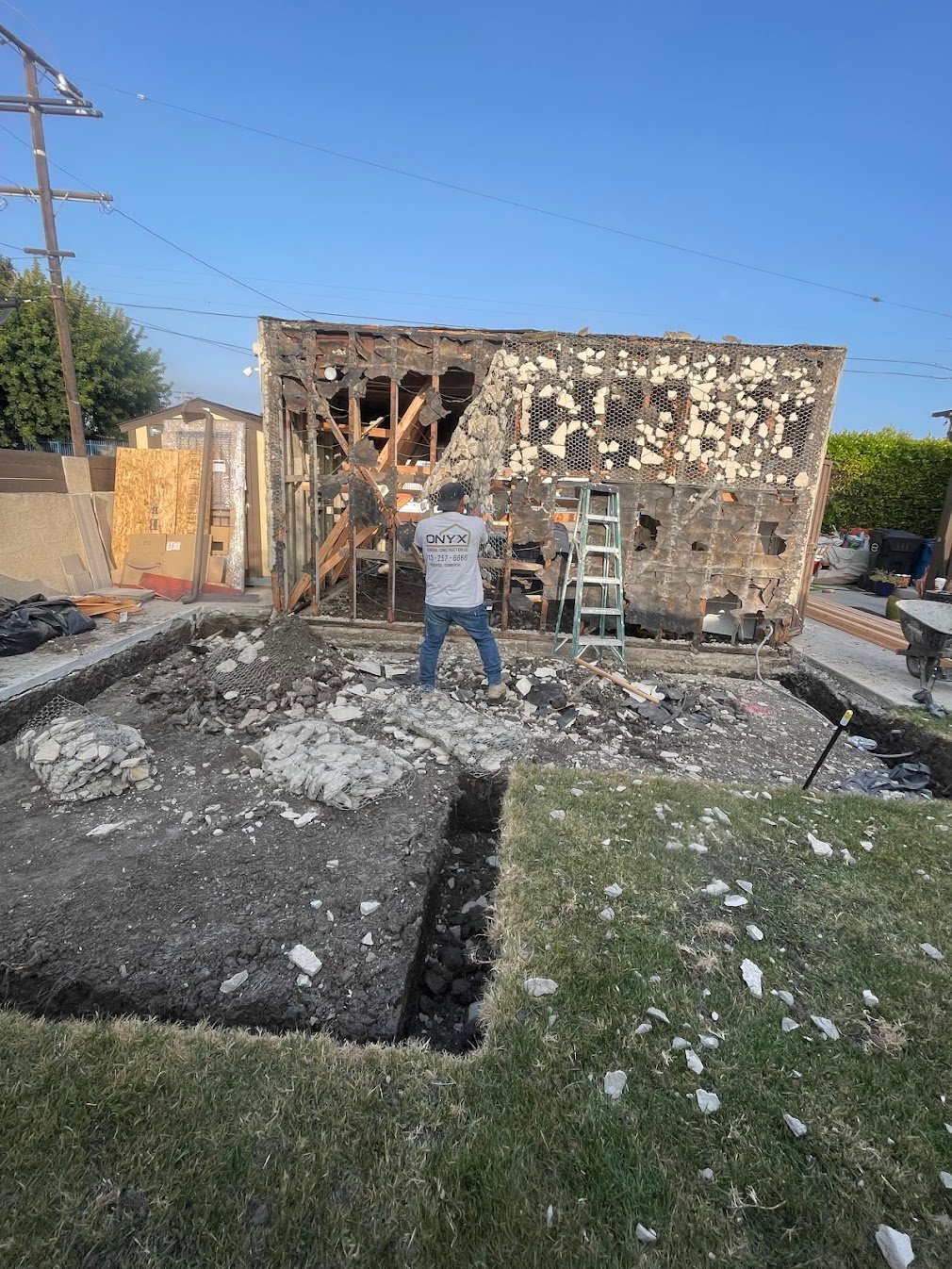
Structural demolition and excavation at a Los Angeles residential project.
Controlled removal exposes structure and utilities.
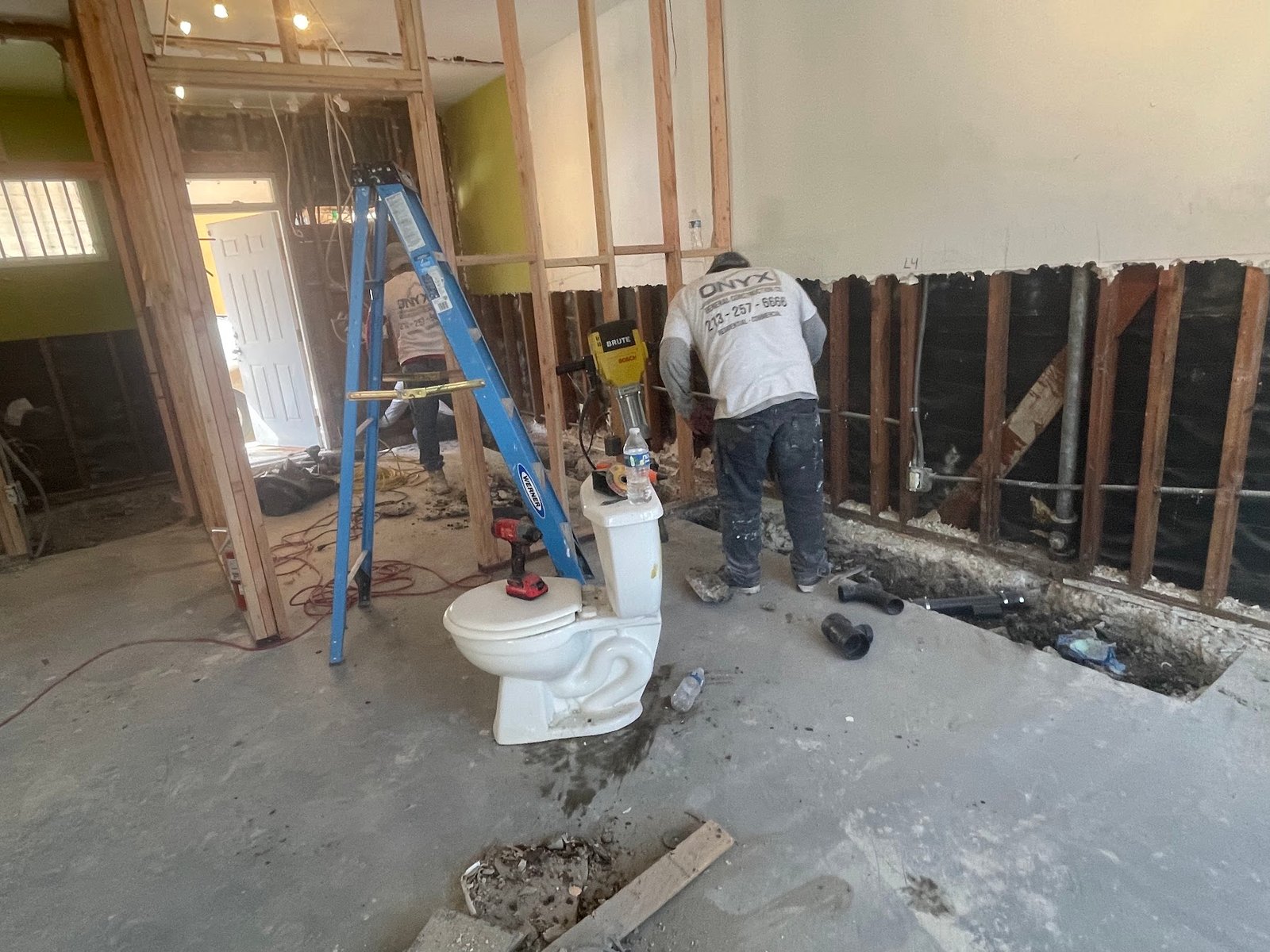
Interior slab cutting for plumbing and foundation preparation.
Interior demo often reveals the first real scope shifts.
1
Demolition & Site Preparation

Clearing, protecting, and defining the jobsite

This is where the project stops being theoretical and becomes physical.

Demolition is not just removal. It is the stage where protection, access, haul-away, safety, and sequencing all begin to show whether the job is being run with discipline. Clean staging, controlled removals, and organized debris management keep the site readable instead of chaotic.

On additions and remodels across Los Angeles, this is also where hidden conditions surface. Existing framing surprises, old plumbing paths, utility conflicts, and previously concealed code issues usually appear here, which is why the first phase affects the calendar more than most owners expect.
Typical schedule share 5%–10% of total project duration
Typical cost range 3%–8% of the construction budget
Key focus Safety, protection, access, and clean staging
Risk points Hidden conditions, structural surprises, existing violations
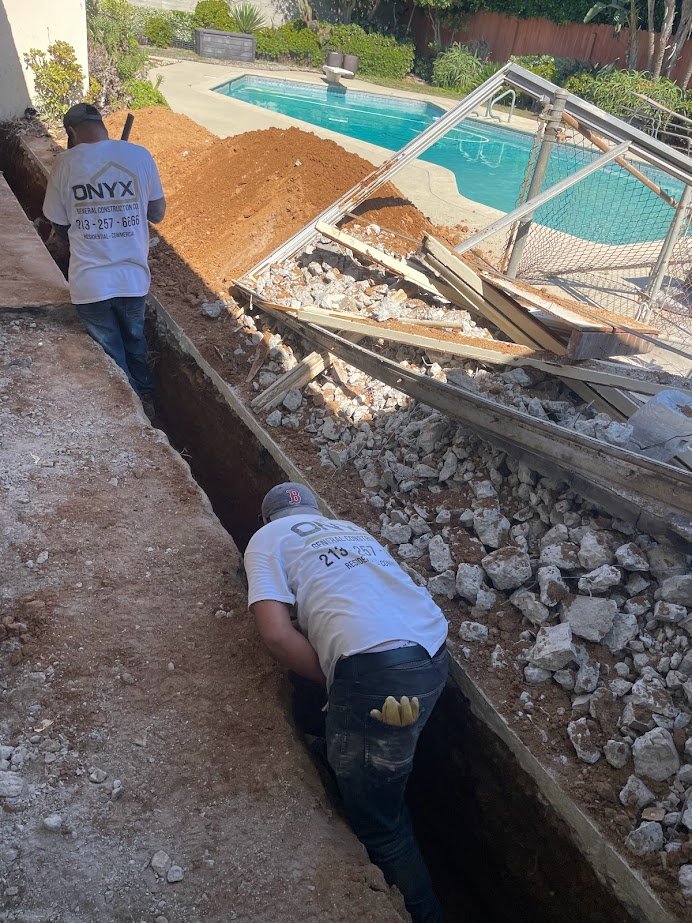
Deep exterior trenching near a poolside addition area in Los Angeles.
Exterior excavation creates the groundwork for structure.
Backyard demolition and footing preparation at a Los Angeles home.
Footing prep follows once the site is truly opened.
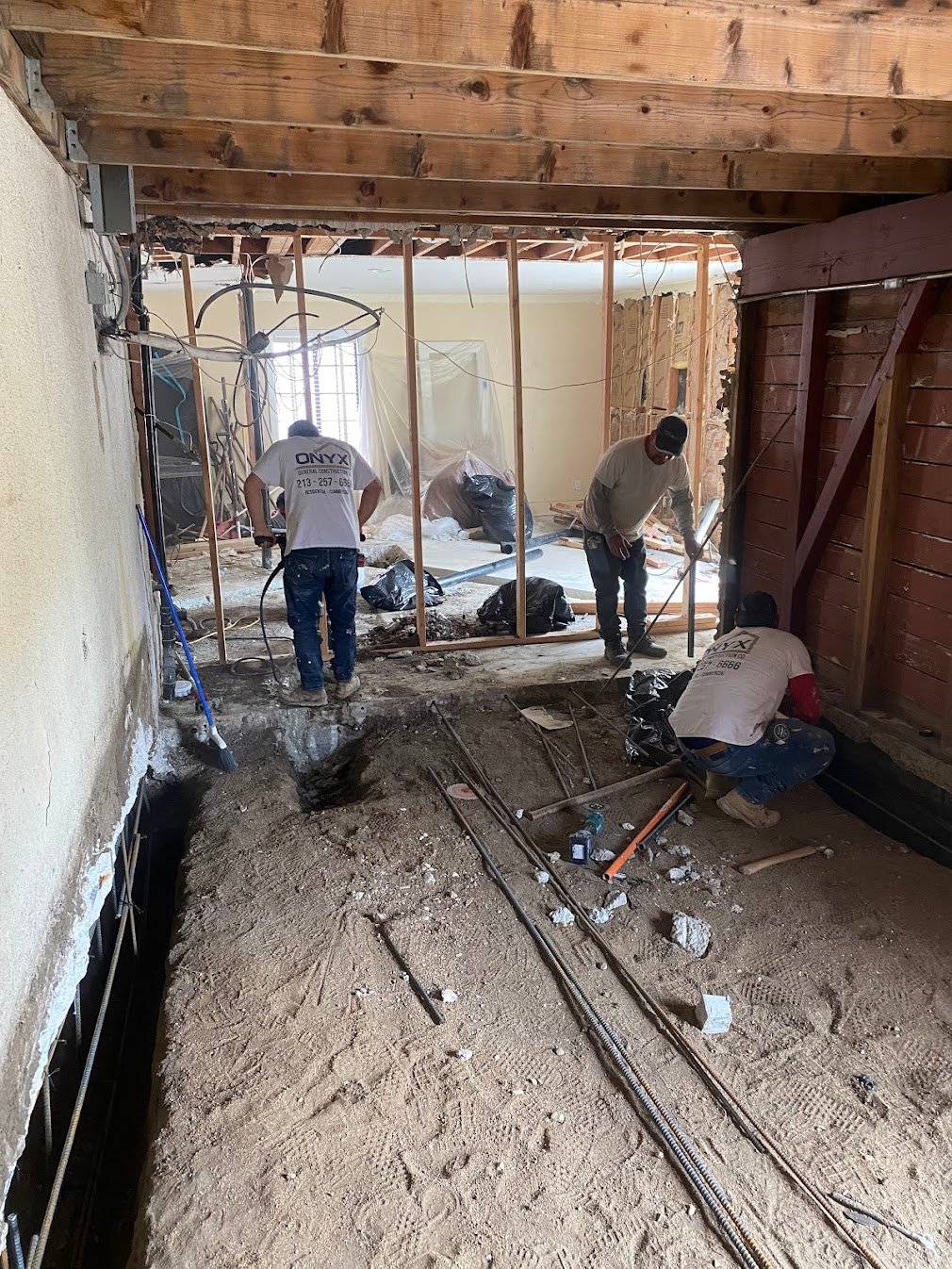
Interior demolition for foundation preparation in a Los Angeles residence.
Interior and exterior prep have to stay coordinated.
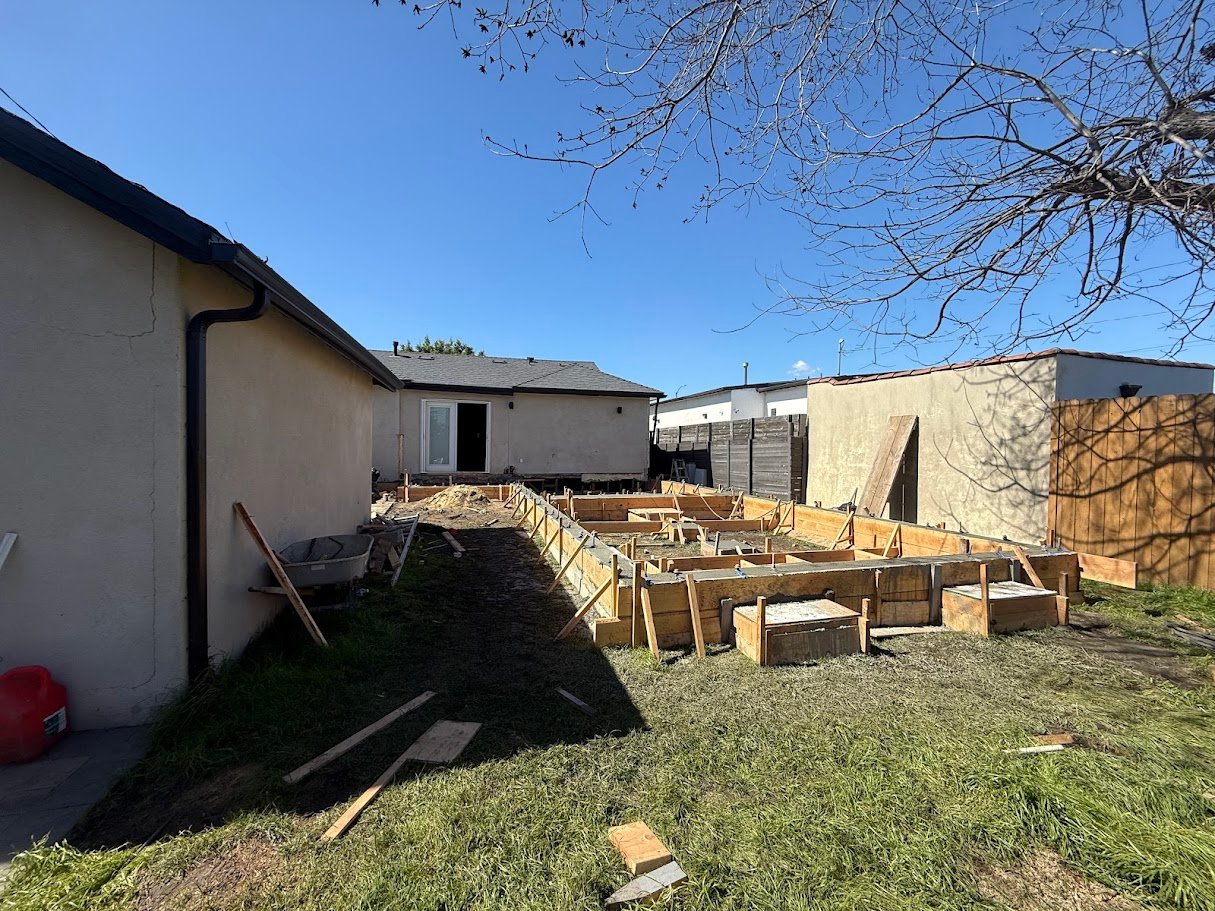
Perimeter foundation forming at a Los Angeles remodel.
Formwork establishes the exact footprint of the work.
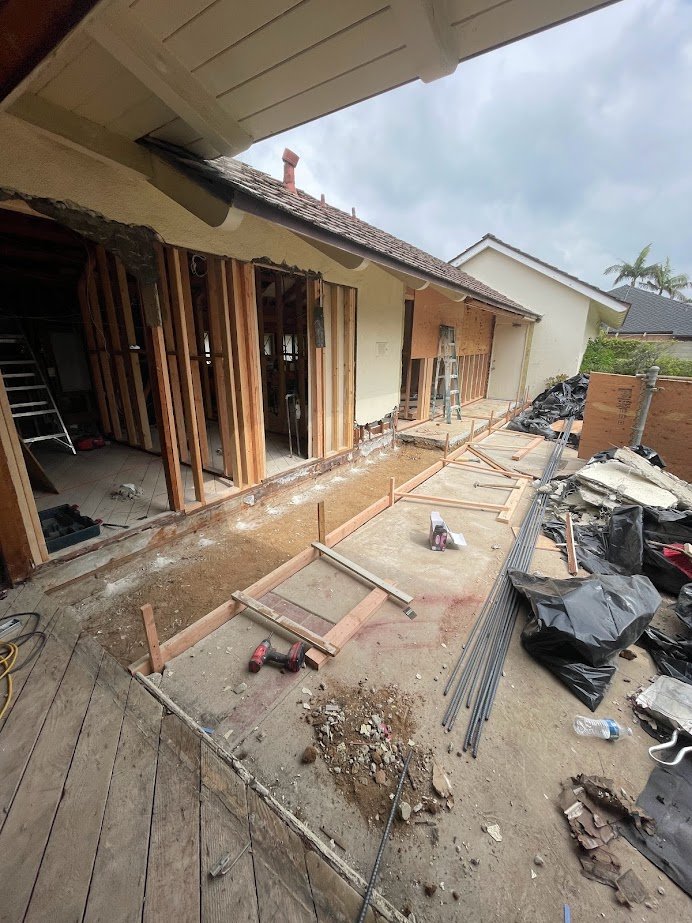
Raised foundation footing work for a Los Angeles bathroom addition.
Raised conditions demand careful footing geometry.
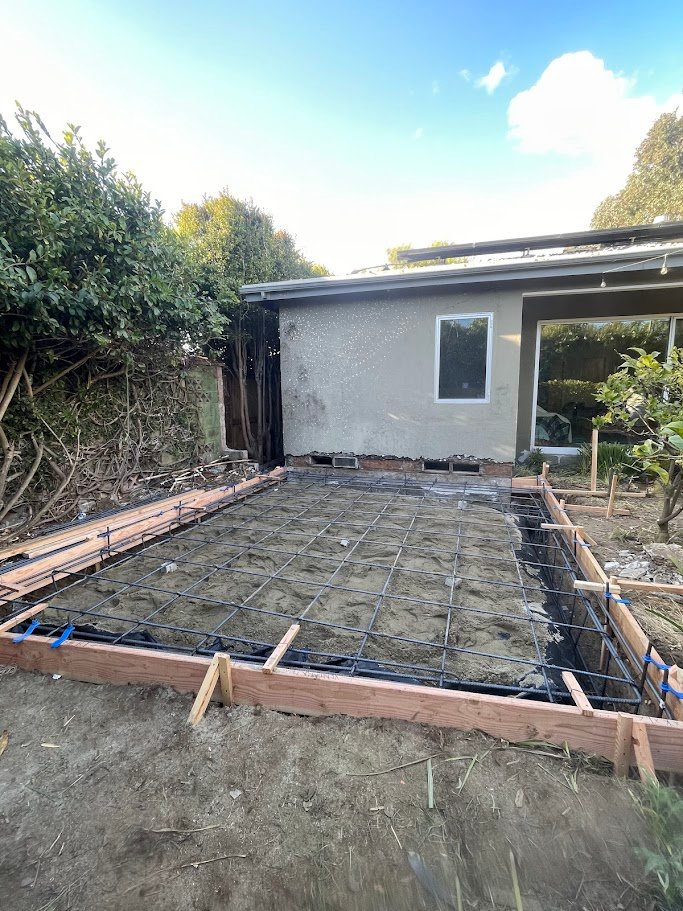
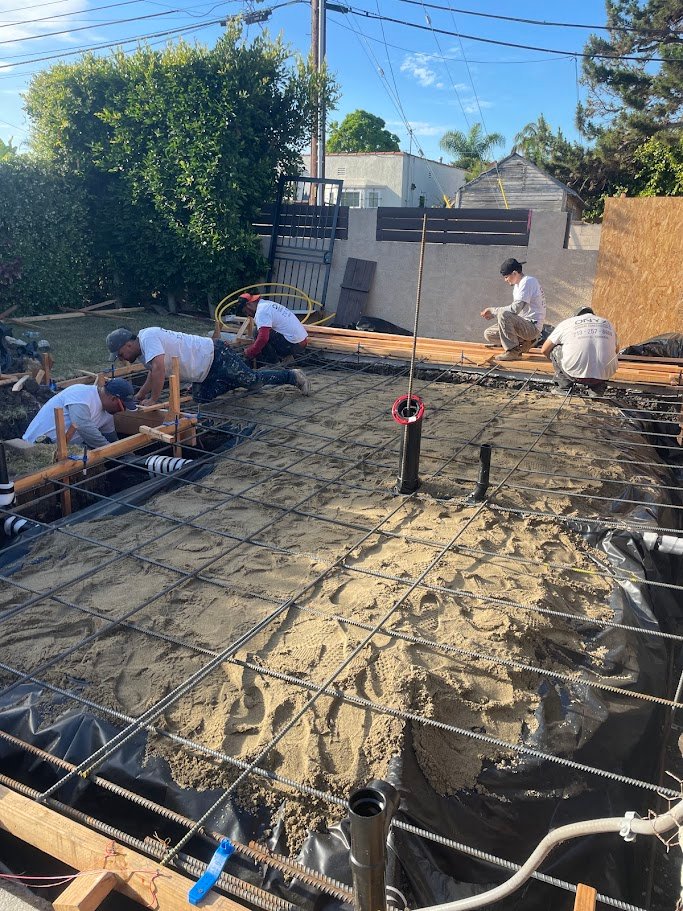
Rebar and slab preparation for a Los Angeles room addition foundation.
Rebar layout is where engineering becomes visible.
2
Foundation

Where the engineering meets the ground

This phase locks in structural decisions that will outlast every finish.

Foundation work covers trenching, footings, rebar, hold-downs, anchor bolts, vapor barriers, and slab or grade-beam pours. Once these pieces are set, the structural logic of the project is largely fixed, which is why this stage deserves close documentation and disciplined inspection coordination.

In Los Angeles, soil conditions and seismic requirements influence almost everything here. On ADUs, room additions, and larger remodels, that may mean raised systems, thickened slabs, grade beams, retaining conditions, or drilled elements that have to be resolved before framing can begin cleanly.
Typical schedule share 10%–15% of total project duration
Typical cost range 8%–15% depending on soils and structural scope
Inspection checkpoint Pre-pour sign-off for rebar, hardware, and footing prep
Risk points Soil surprises, utilities, and pour-day coordination
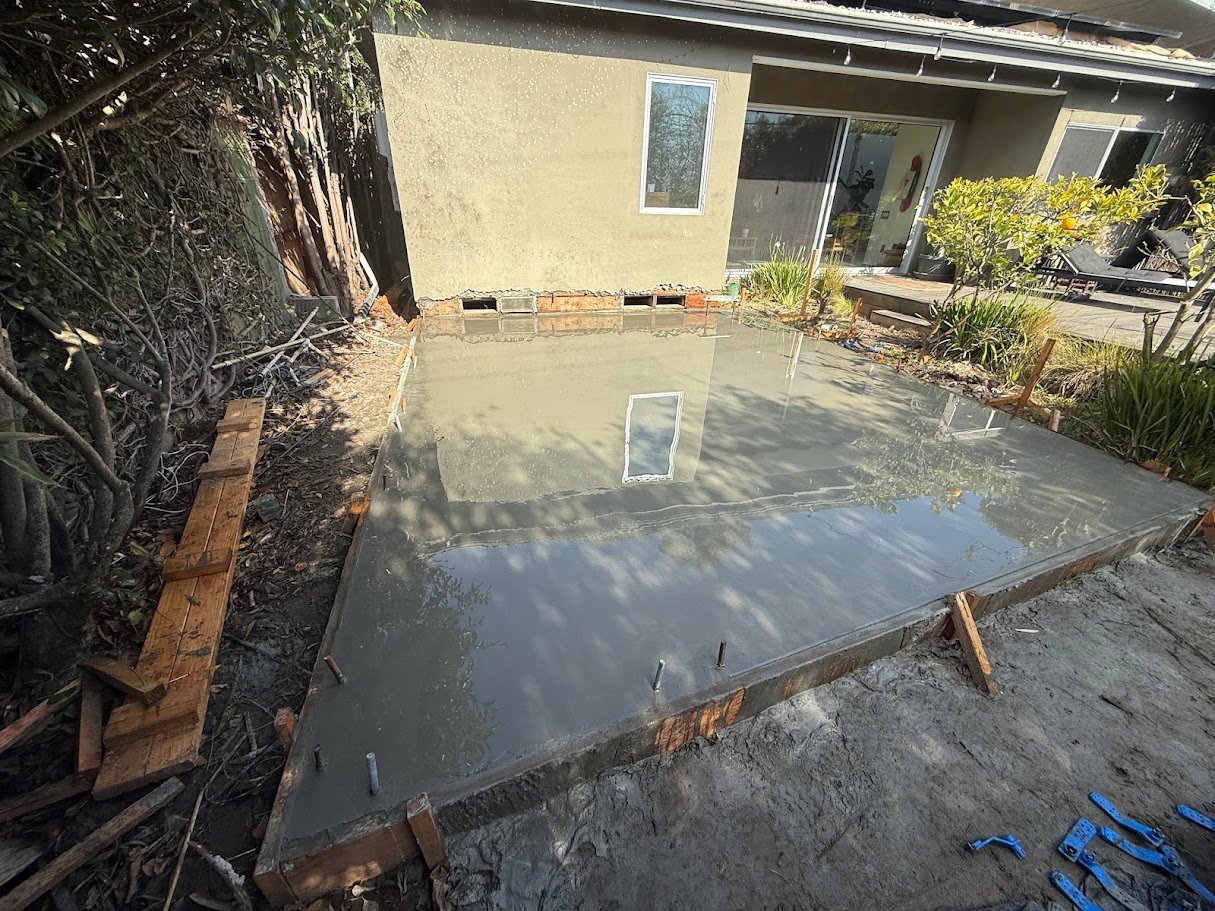
Concrete slab pour for a Los Angeles home addition foundation.
Pour day is the payoff for accurate prep work.
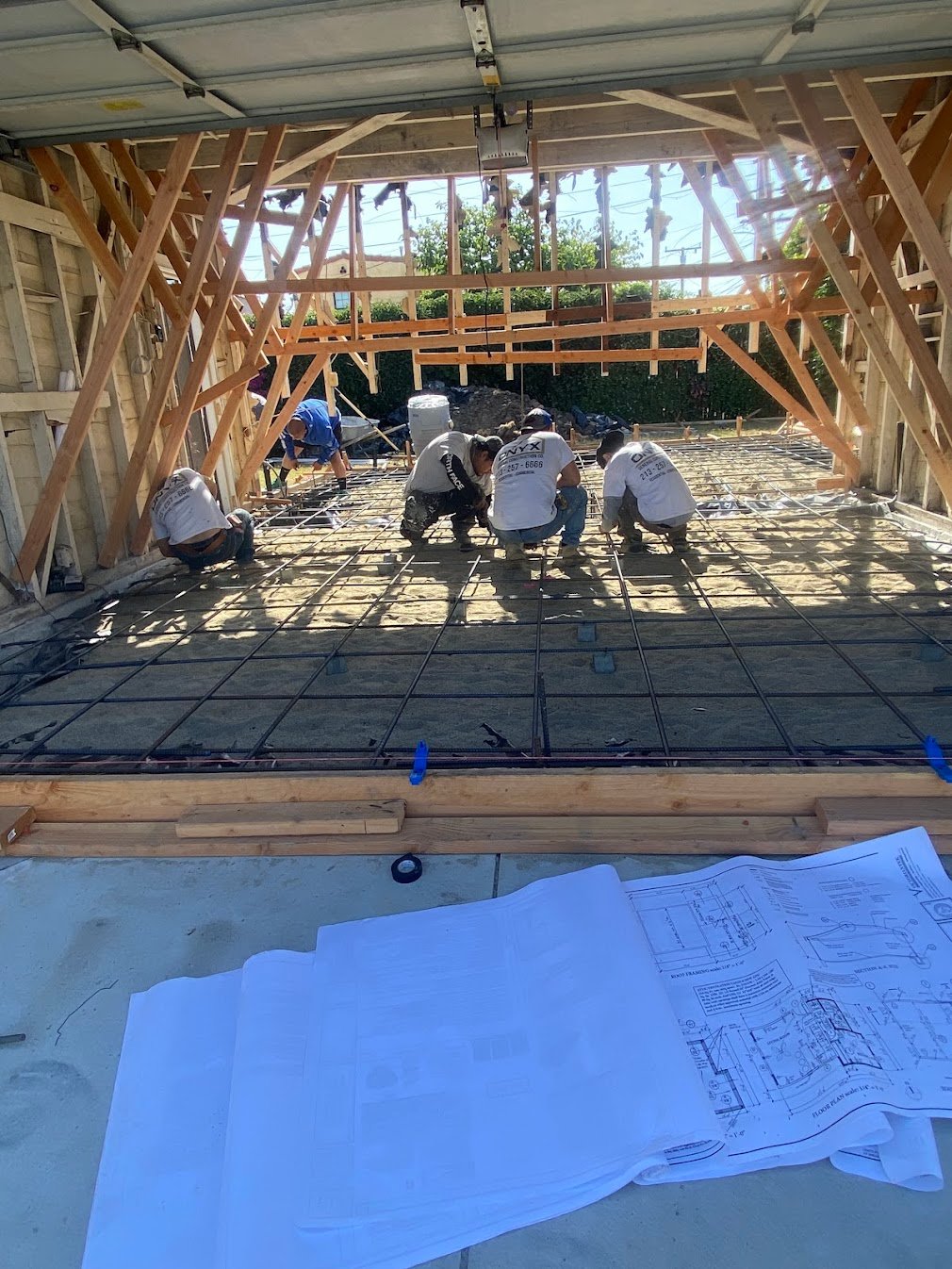
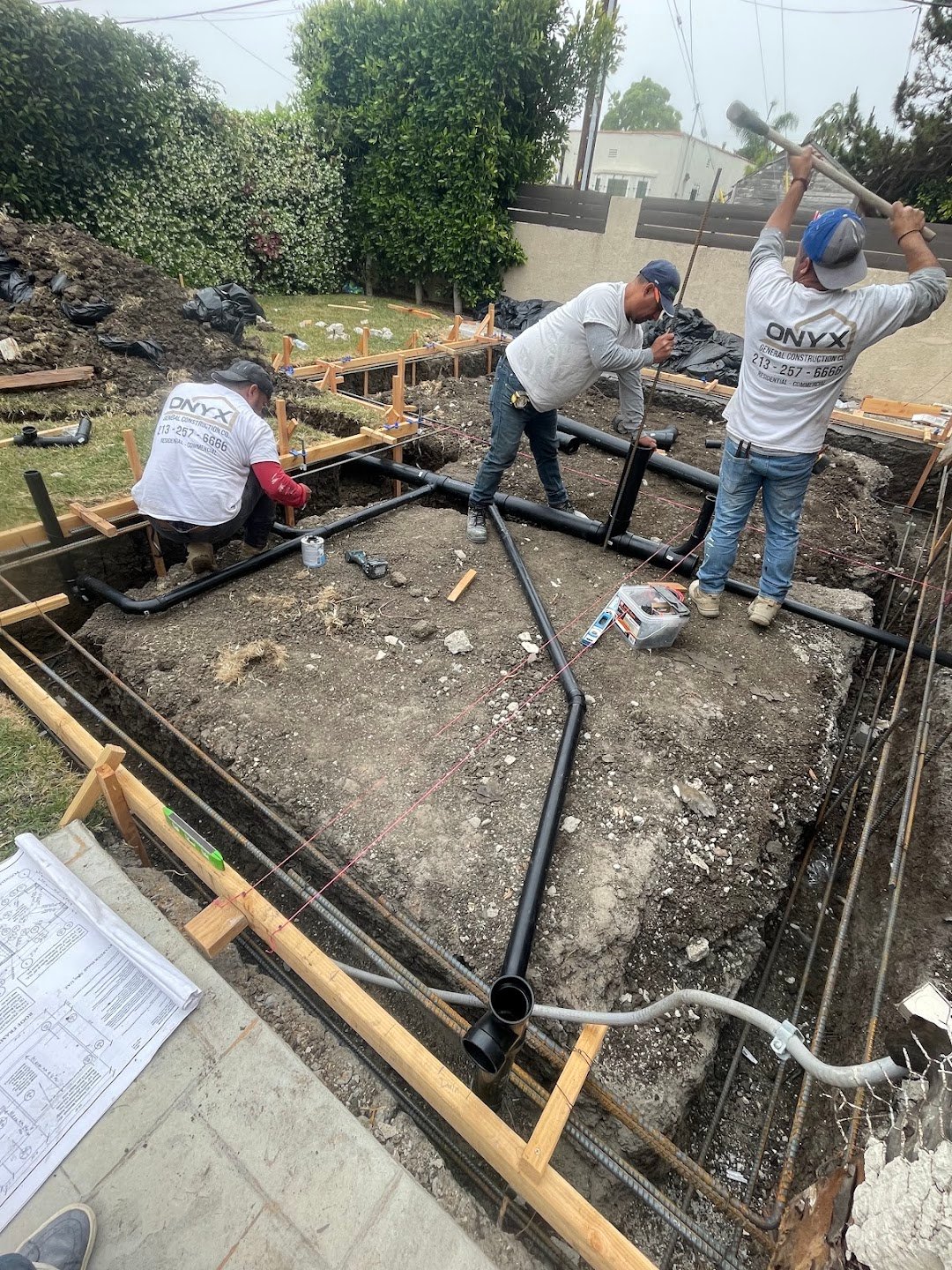
Rebar grid and under-slab plumbing layout for a Los Angeles ADU foundation.
Under-slab plumbing has to align before concrete closes the floor.
Garage conversion rebar preparation for ADU construction in Los Angeles.
Even compact footprints demand full structural discipline.
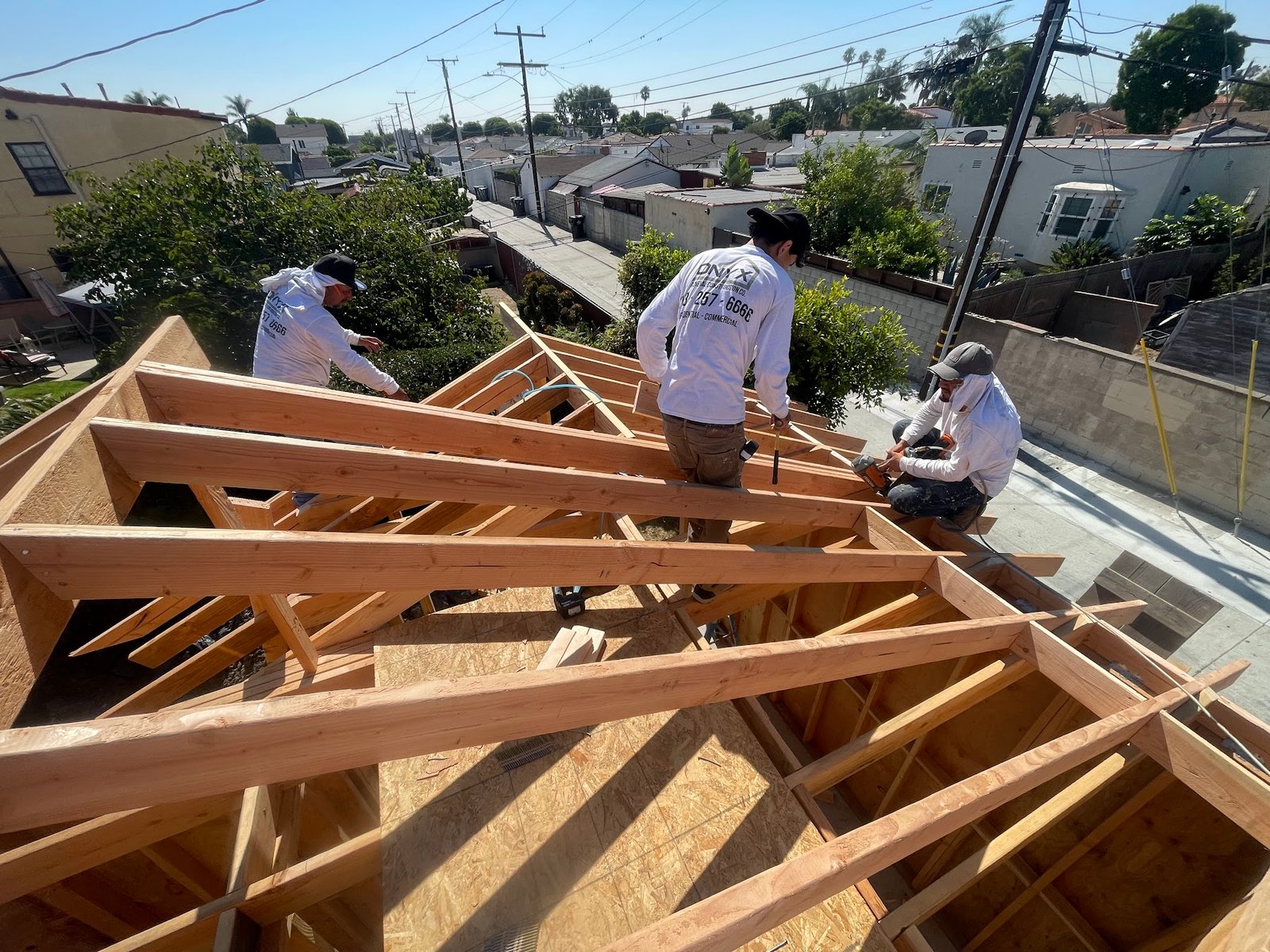
Roof framing and rafter installation for a Los Angeles room addition.
Roof lines begin to define proportion and light.
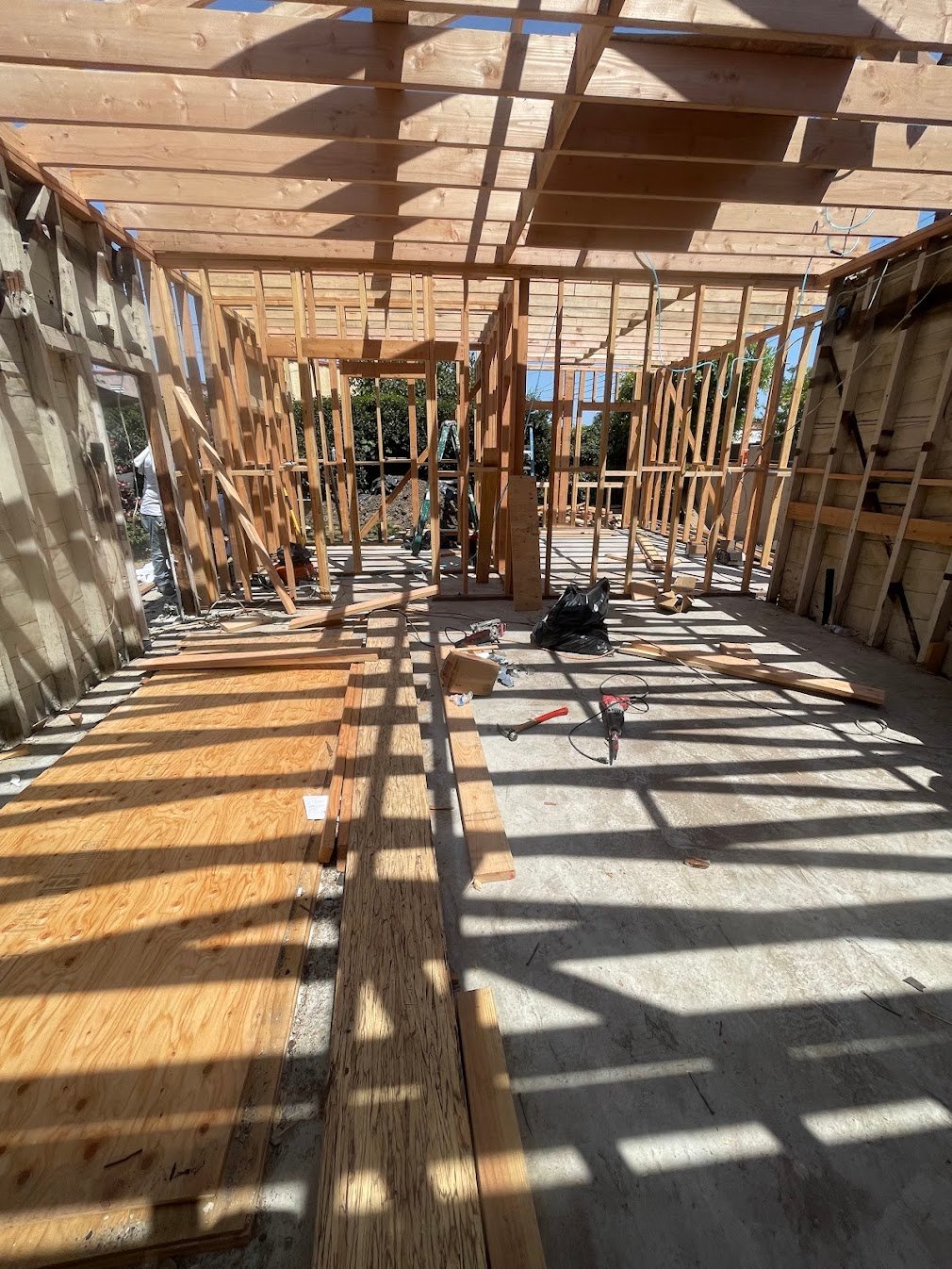
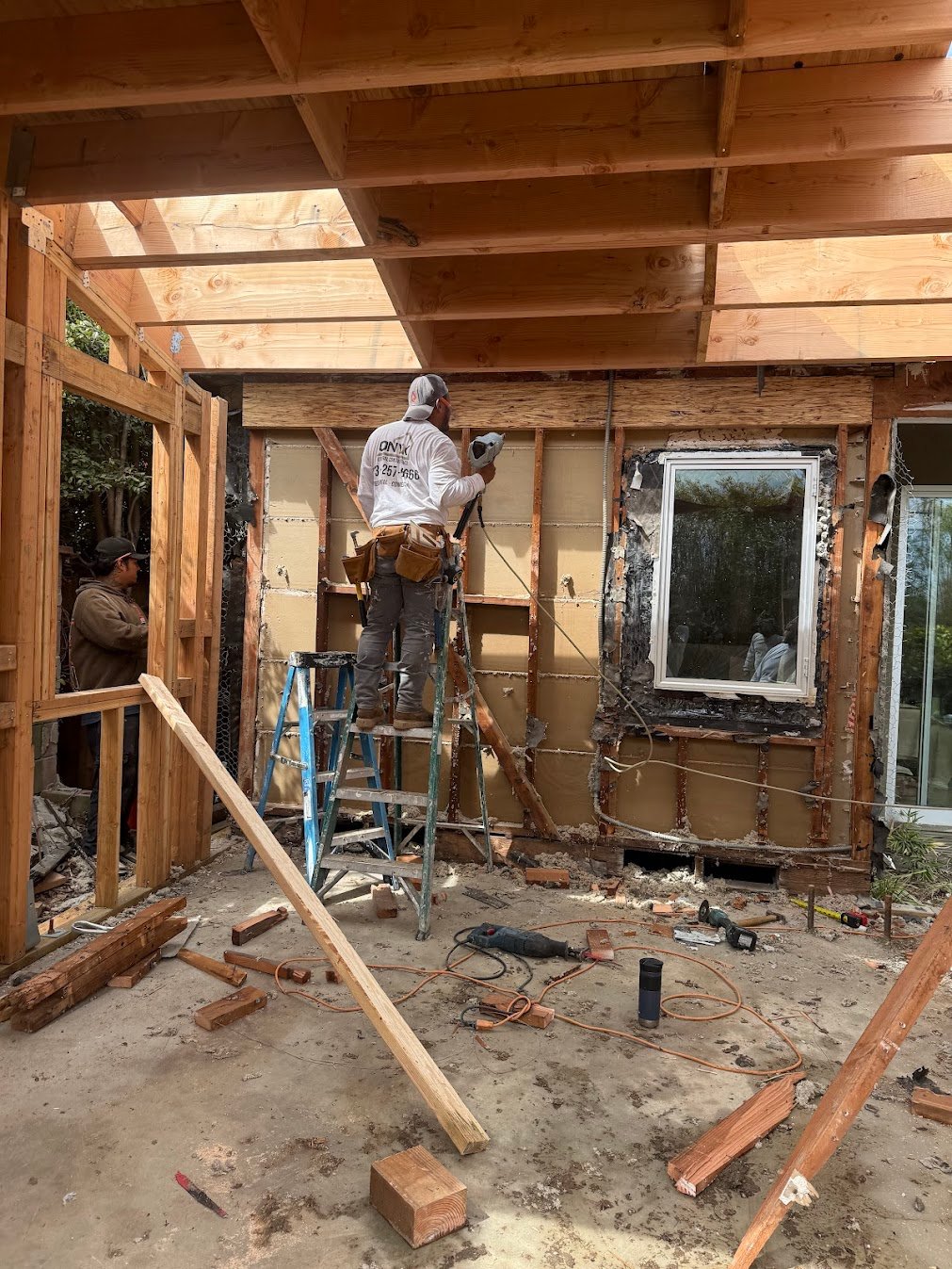
Interior framing and ceiling joists in a Los Angeles room addition.
Room volume becomes legible for the first time.
Roof truss structure installation for a Los Angeles home addition.
Structure has to support both layout and downstream trades.
3
Framing

When the project becomes three-dimensional

Framing is the first moment most owners actually feel the plan.

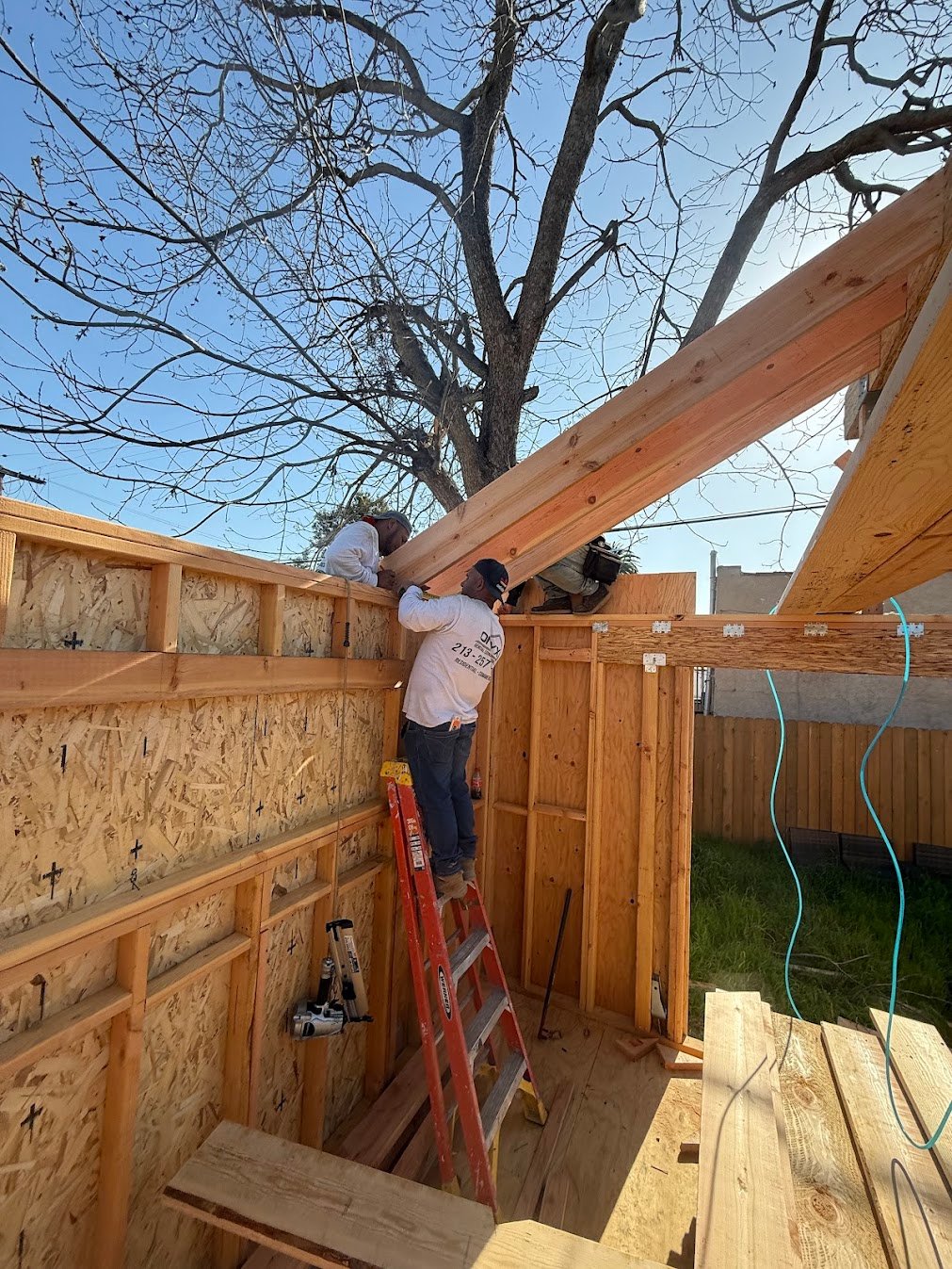
Stud walls, beams, joists, rafters, trusses, and sheathing set the proportions of the home. Ceiling heights, openings, circulation, and room relationships all become real in this phase, which is why clean line work matters so much. Straight framing reads before any finish ever does.

This is also where structural connectors, blocking, shear walls, and tie-ins have to stay coordinated with the mechanical, plumbing, and window strategy that follows. On larger Los Angeles remodels and second-story work, that coordination often determines whether the rest of the schedule stays clean.
Typical schedule share 15%–20% of total project duration
Typical cost range 15%–25% including lumber, hardware, and labor
Inspection checkpoint Framing inspection with structural sign-offs where required
Risk points Field revisions, opening coordination, and trade conflicts
Structural tie-in work for a Los Angeles room addition.
Existing-to-new tie-ins are where remodel complexity shows up.
LVL beam installation for a vaulted ceiling room addition in Los Angeles.
Major beam work reshapes both structure and interior feel.
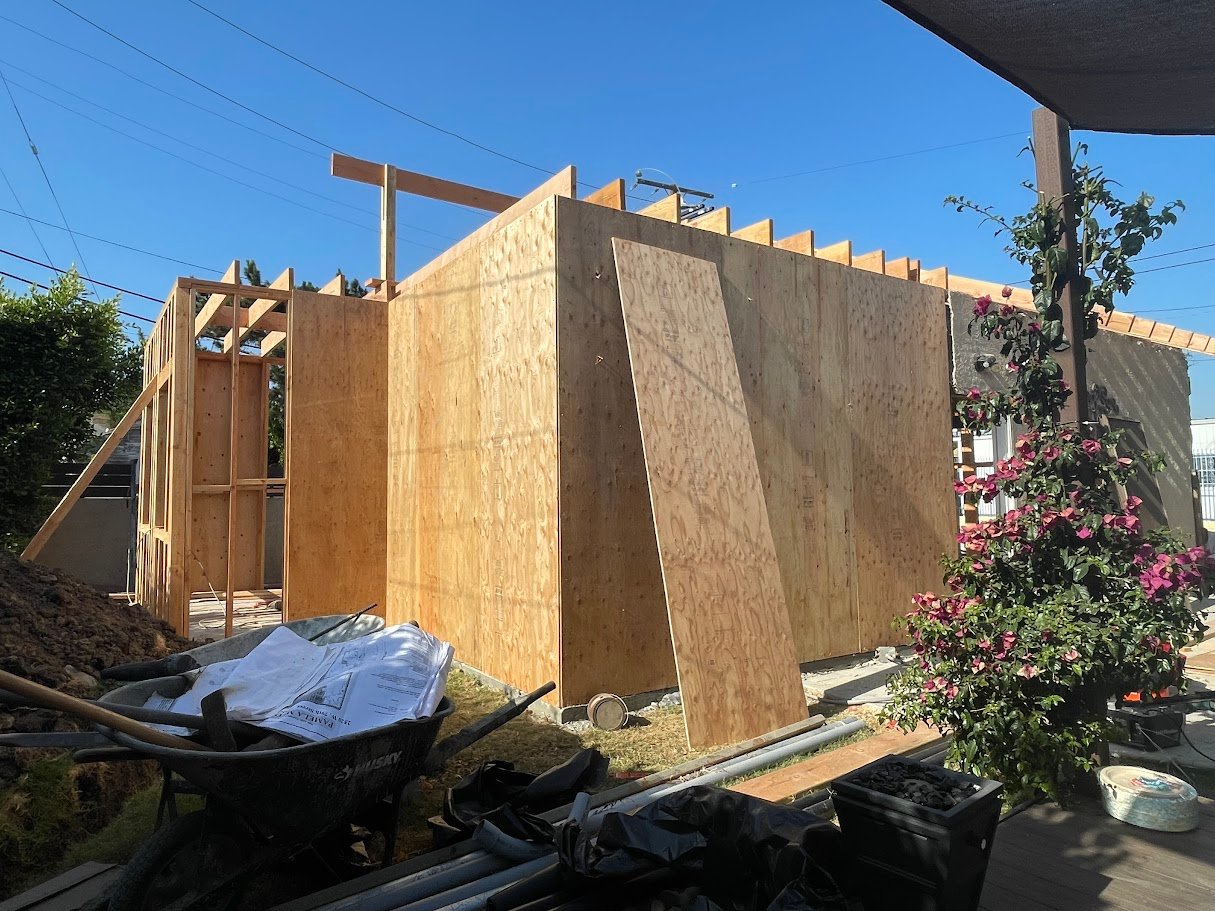
Exterior framed and sheathed ADU walls under construction in Los Angeles.
Sheathing helps the project start reading as an exterior volume.
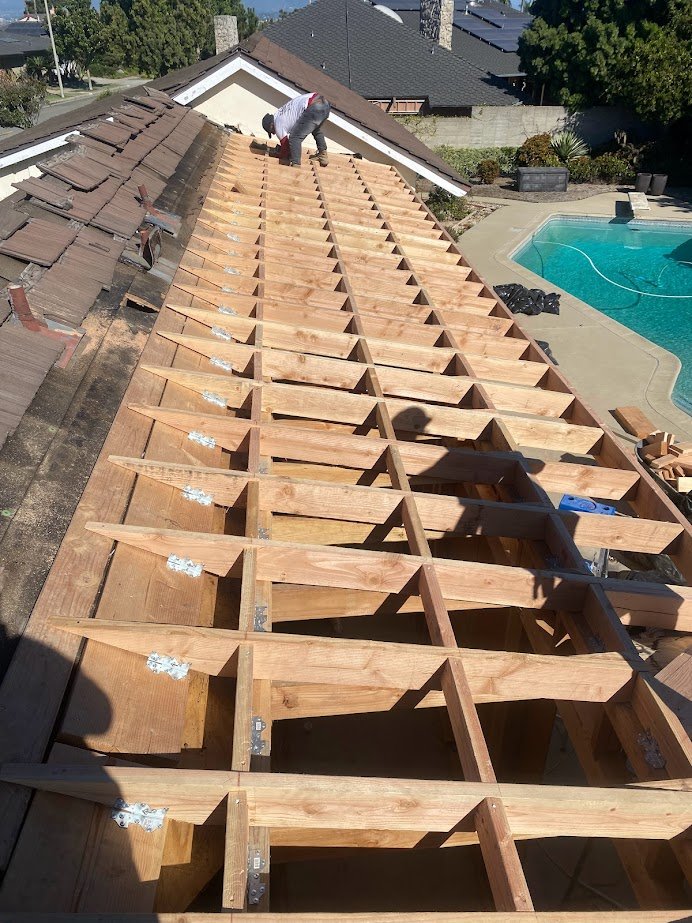
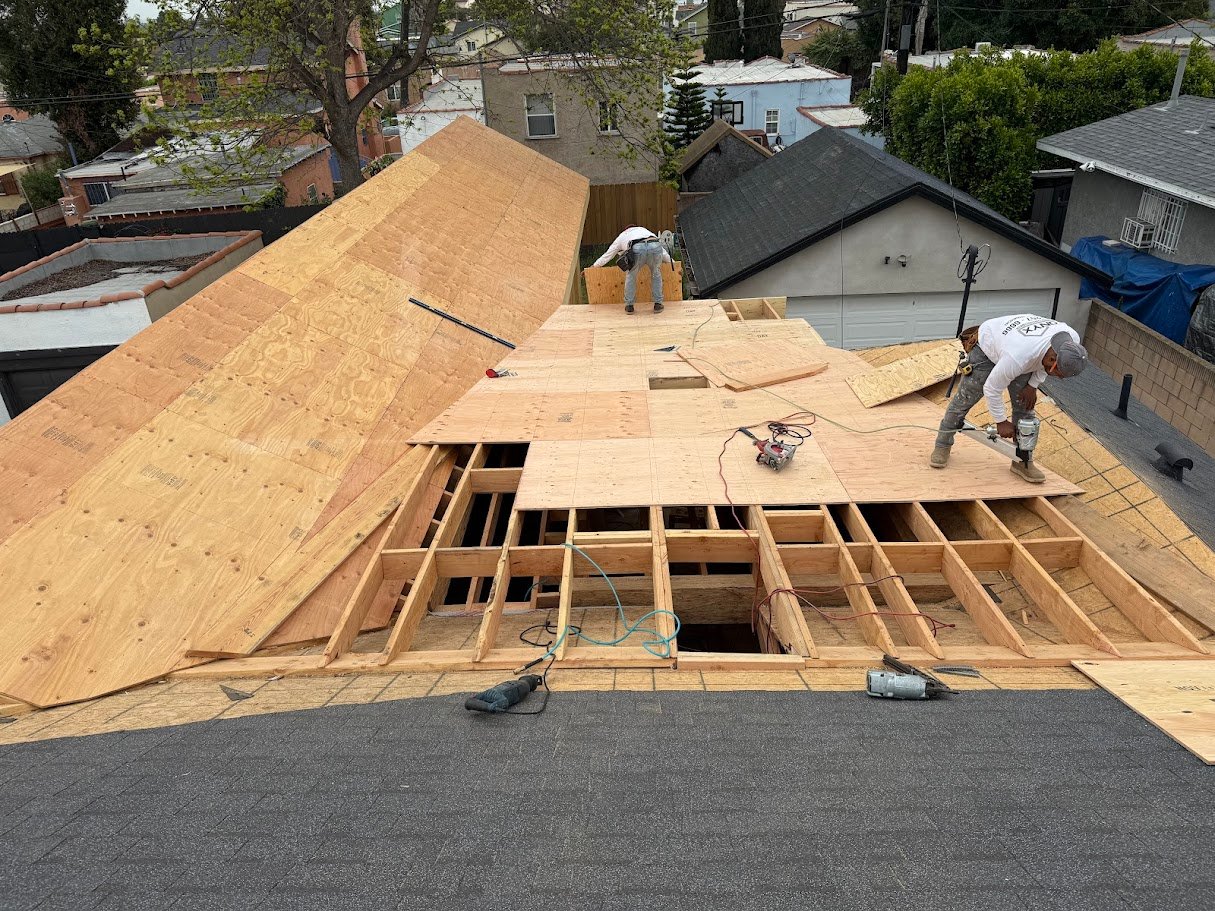
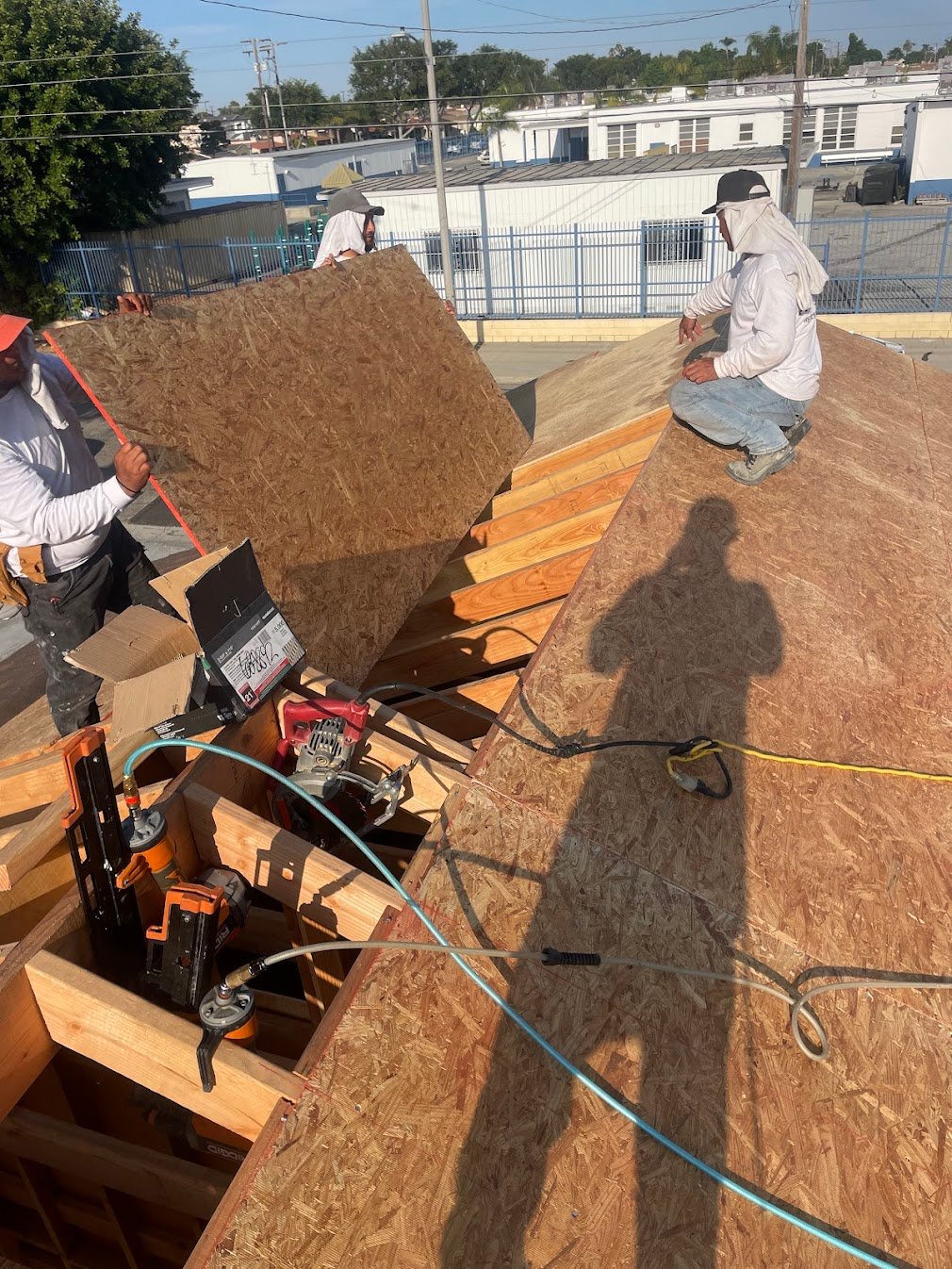
Roof decking installation for a Los Angeles home addition.
Decking is the transition from skeleton to weather protection.
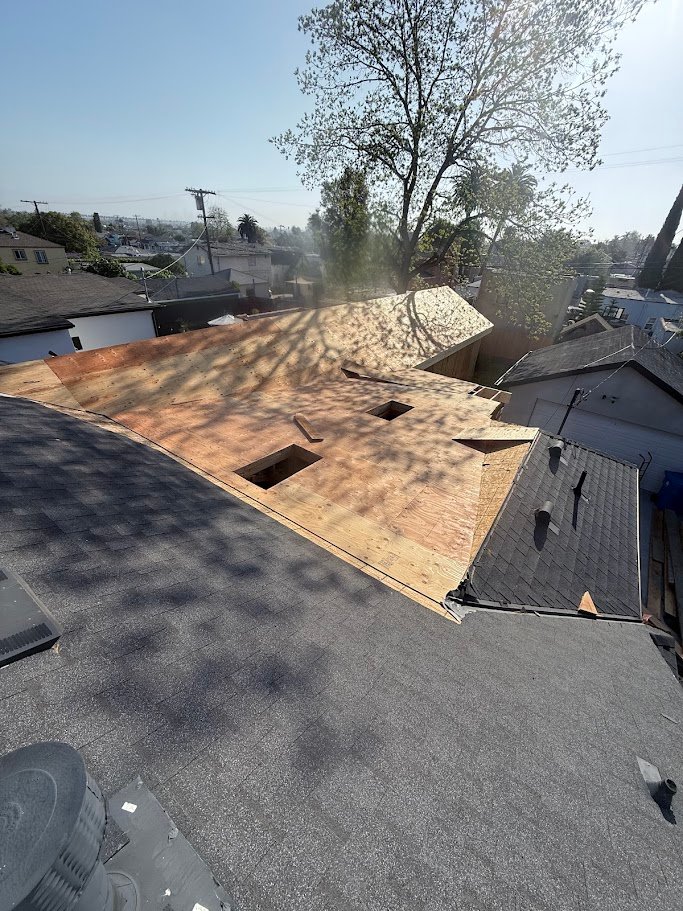
Roof dry-in work on a Los Angeles master suite addition.
Dry-in changes the pace of the interior schedule.
4
Roofing & Hot Mopping

Weather protection before the inside can settle in

This is the moment the building starts to hold itself against the elements.

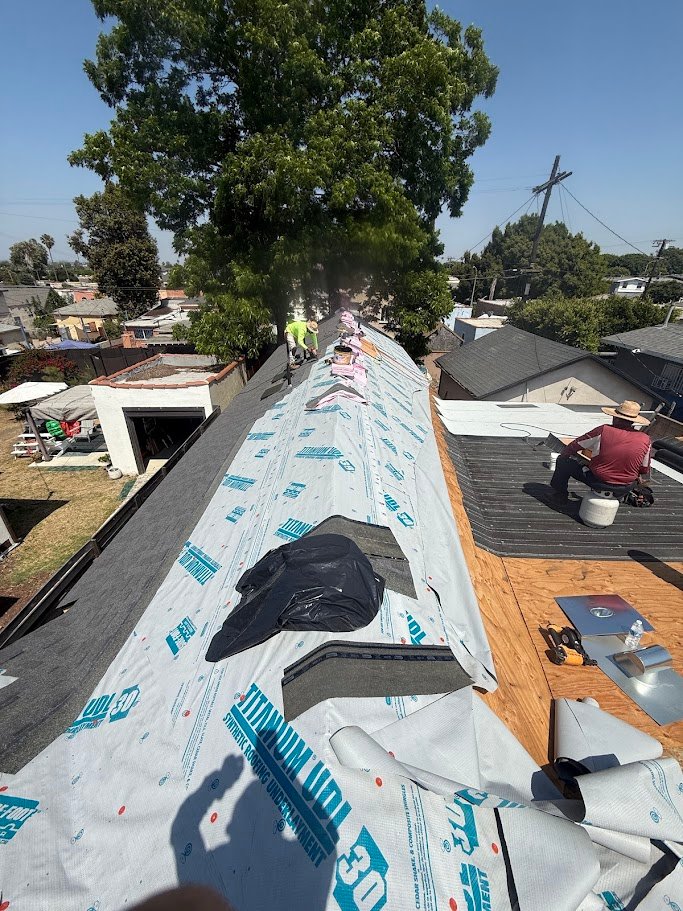
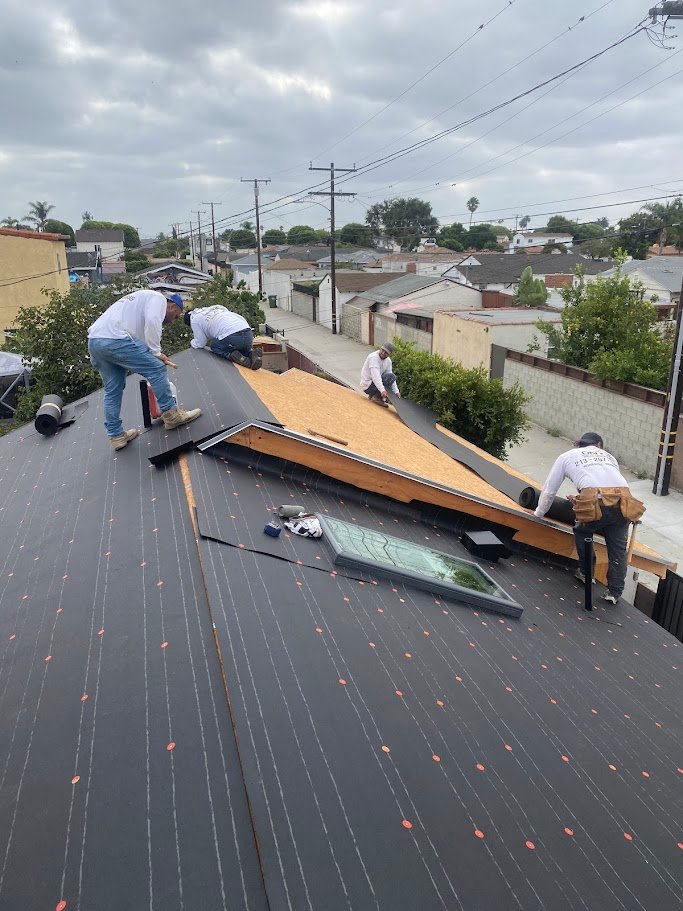
Roofing, underlayment, hot-mopped areas, flashings, and penetration detailing protect the structure from water intrusion and allow interior progress to move with more confidence. Once the roof is dry, the site feels fundamentally different.

Details matter here. Drains, parapets, skylight curbs, vent penetrations, and transitions are where long-term failures usually begin when this phase is rushed. On a well-run project, those are the very areas that receive the most attention.
Typical schedule share 5%–8% of total project duration
Typical cost range 5%–10% depending on roof system type
Inspection checkpoint Roof nailing and waterproofing inspections where required
Risk points Weather windows and failure at transitions or penetrations
Roof underlayment installation on a Los Angeles master suite addition.
Underlayment and flashing logic need to stay continuous.
ADU roof installation in Los Angeles.
Compact roofs still require full waterproofing discipline.
Roof sheathing installation for a Los Angeles room addition.
Once the envelope closes, interior work can accelerate.
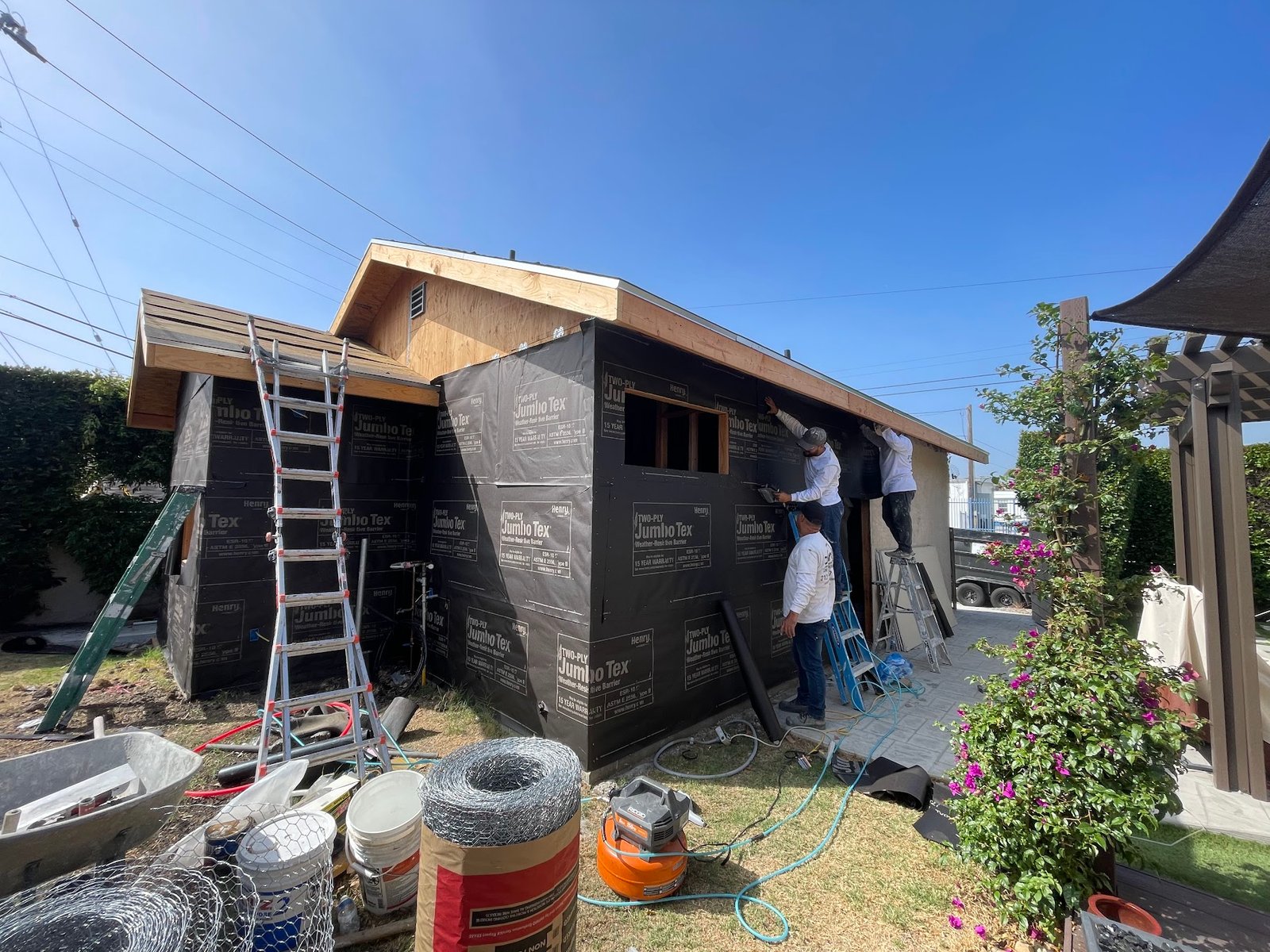
Weather barrier installation on an ADU and home addition in Los Angeles.
Envelope discipline is what keeps the finish assembly honest.
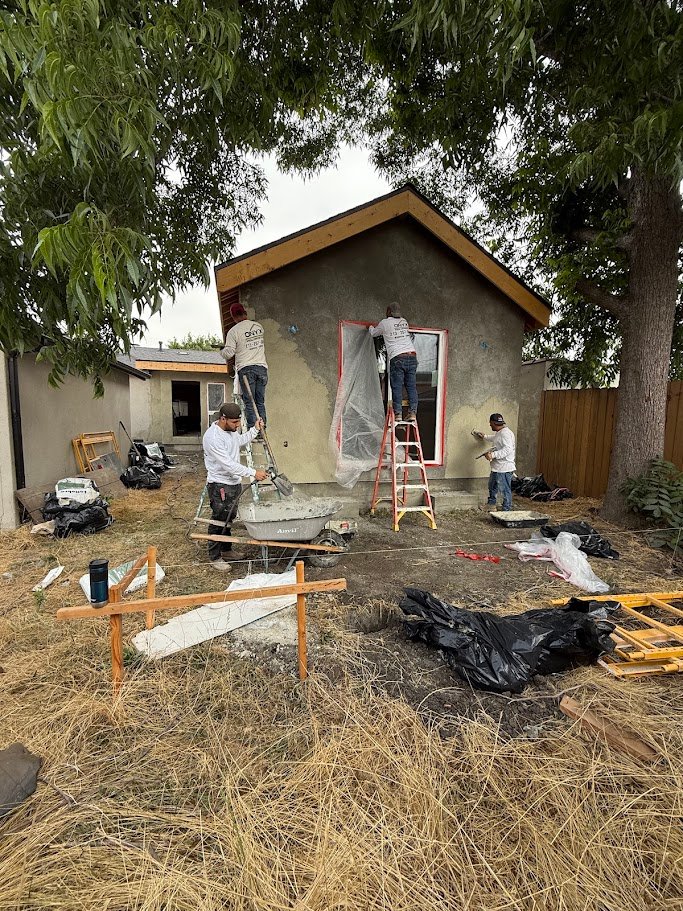
Stucco lath installation on a Los Angeles home addition.
Lath work turns protection layers into a finished wall system.
ADU stucco brown coat application in Los Angeles.
Exterior progress becomes legible once coats begin to build.
5
Windows, Weather Barriers & Lathing

Sealing the envelope before the finish coats arrive

Straight openings and continuous waterproofing change the quality of the whole build.

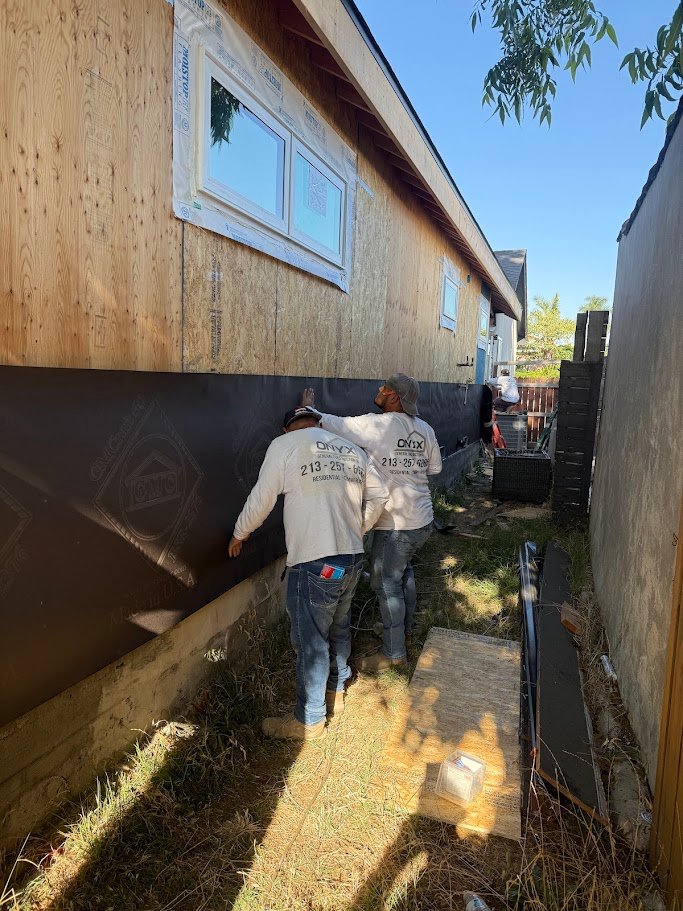
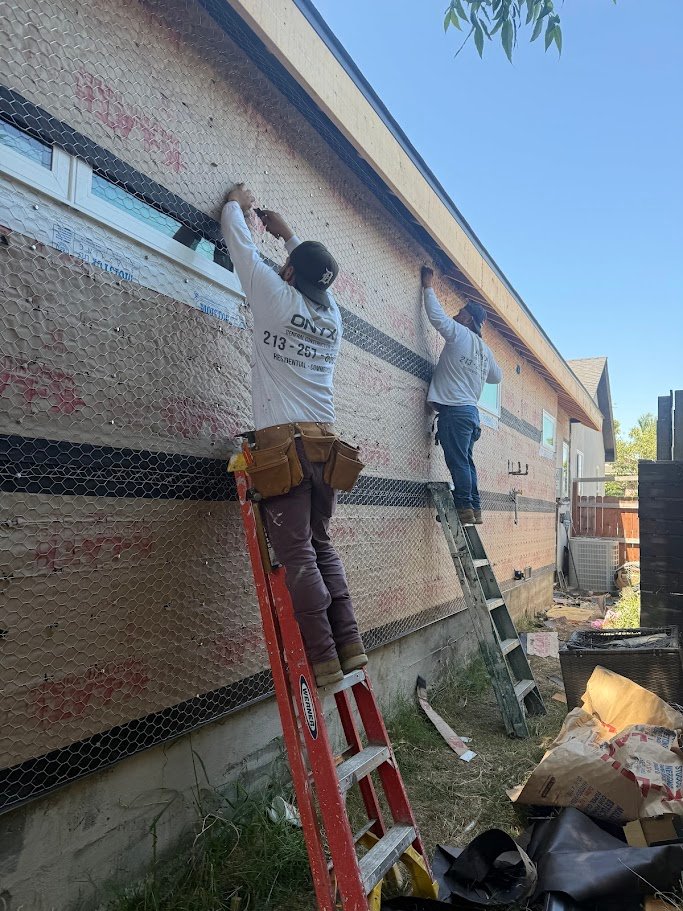
Windows, exterior doors, weather-resistive barriers, flashing logic, trims, screeds, and lath assemblies all come together in this phase. It is one of the clearest indicators of whether a project is being built for durability or merely appearance.

In coastal and westside neighborhoods such as Pacific Palisades, Santa Monica, and Venice, envelope performance is not something owners should treat casually. Straight alignments, tight flashing, and clean WRB continuity are what allow the exterior finish to age well instead of becoming a recurring maintenance story.
Typical schedule share 7%–10% of total project duration
Typical cost range 8%–12% including openings, WRB, and lath
Inspection checkpoint Sheathing, lath, and envelope sign-offs where required
Risk points Missing flashing, water intrusion, and poor lath prep
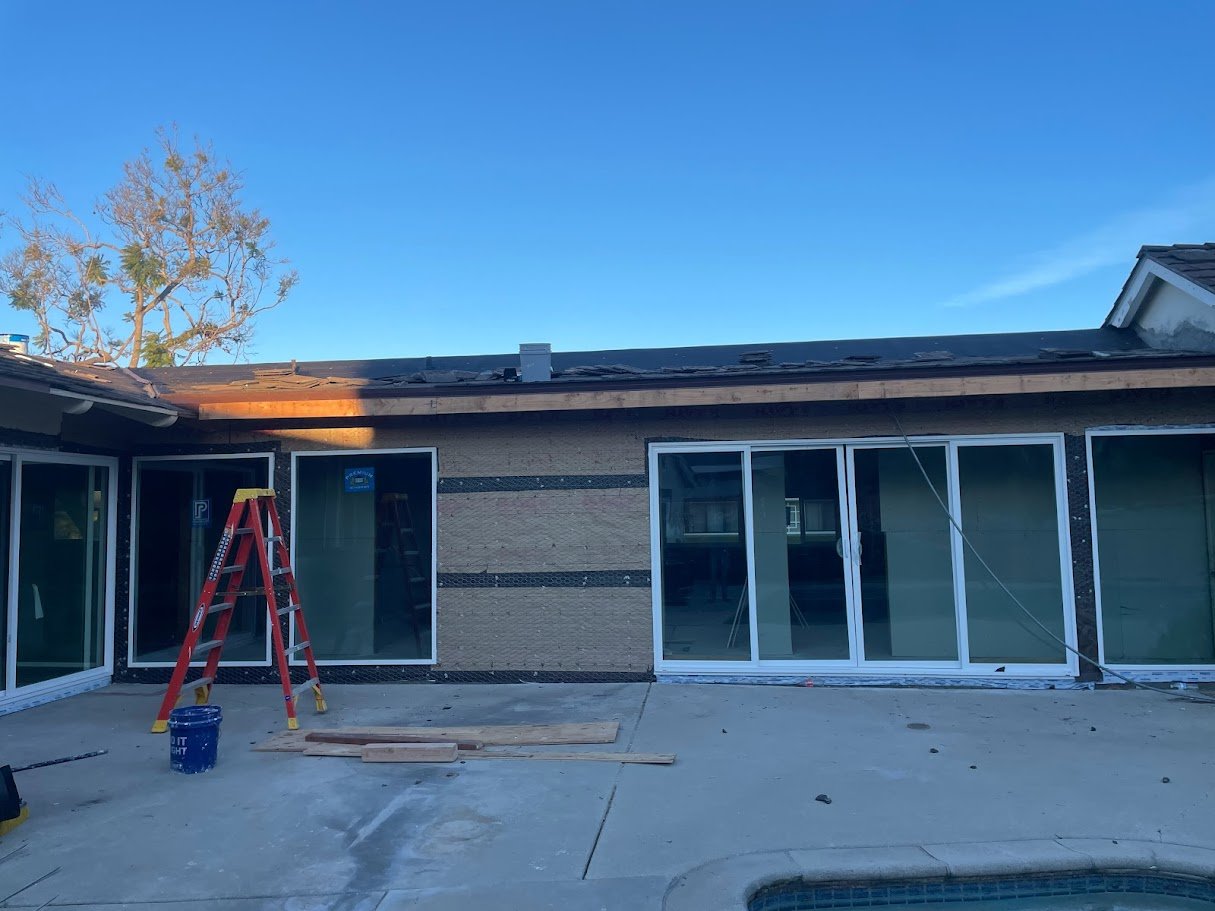
Exterior sheathing waterproofing on a Los Angeles room addition.
Waterproofing details have to be complete before cladding begins.
Stucco lath installation on a Los Angeles addition remodel.
Exterior wall prep reveals how disciplined the field work is.
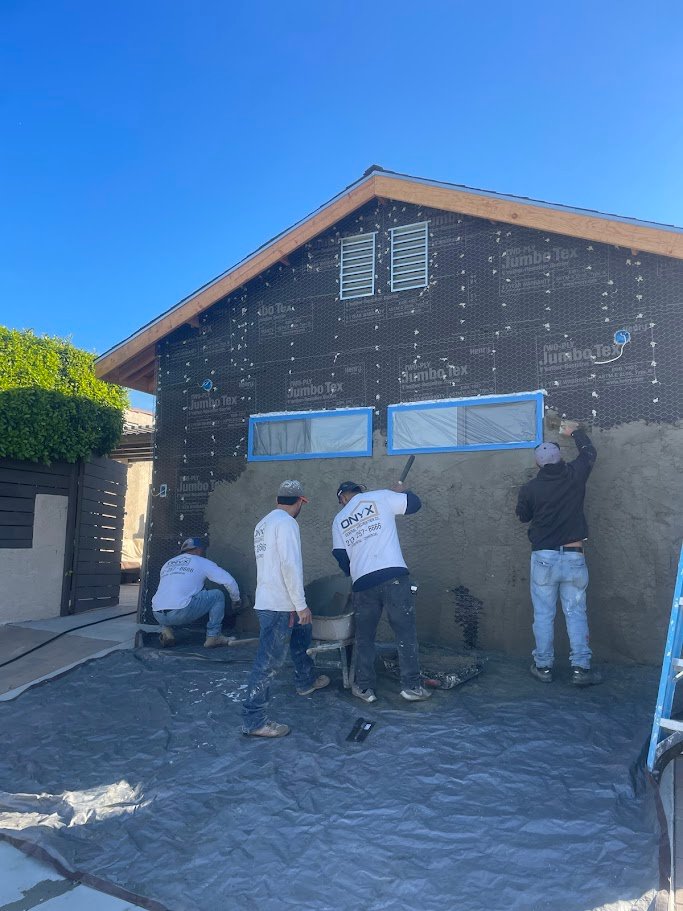
Rear home addition stucco application in Los Angeles.
Finish coats only perform as well as the layers under them.
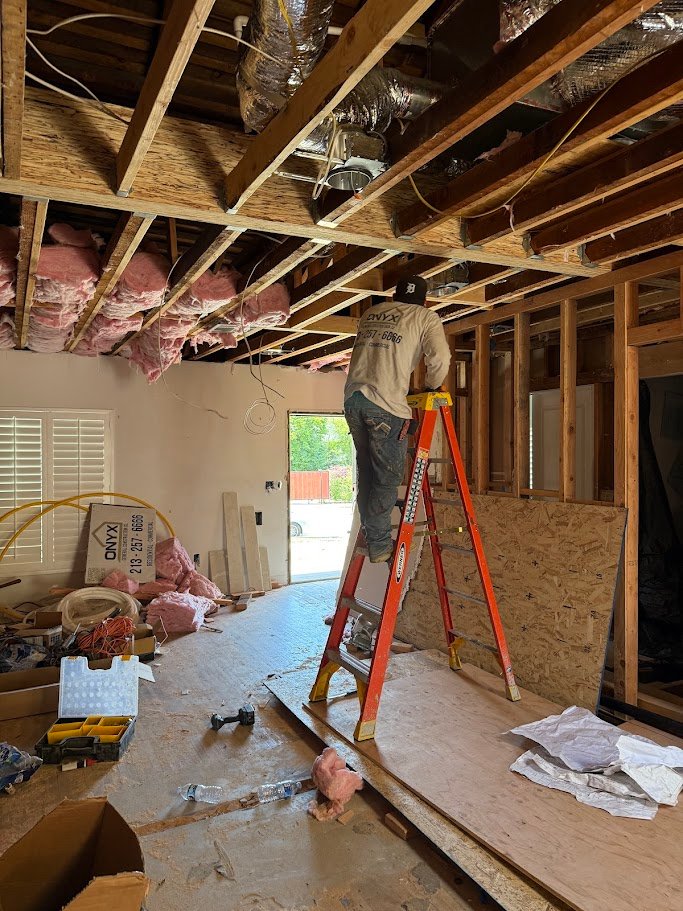
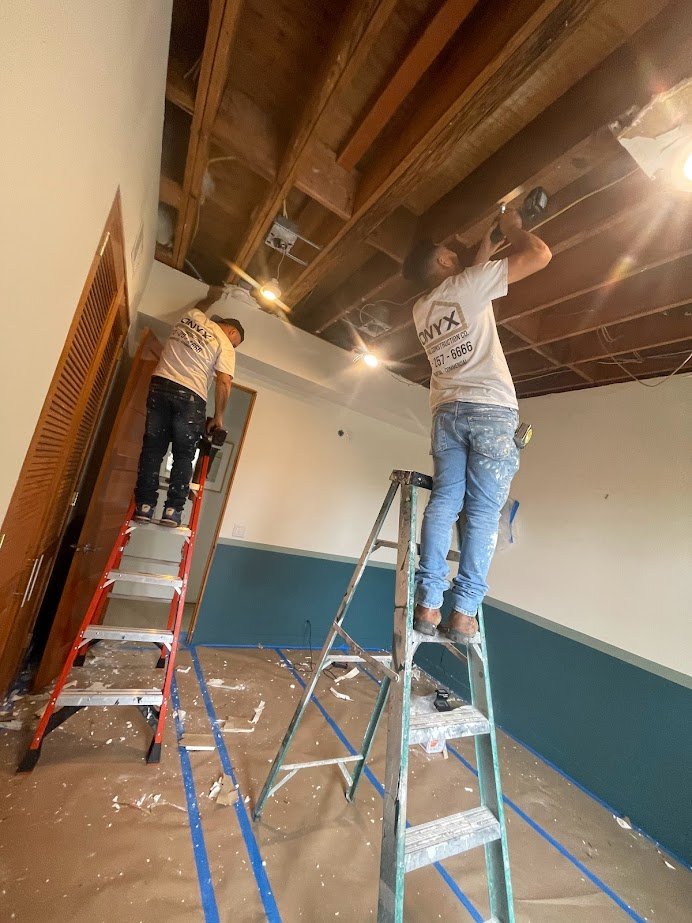
Ceiling demolition with electrical and HVAC rough-in work in Los Angeles.
Ceiling and chase planning affects every room that follows.
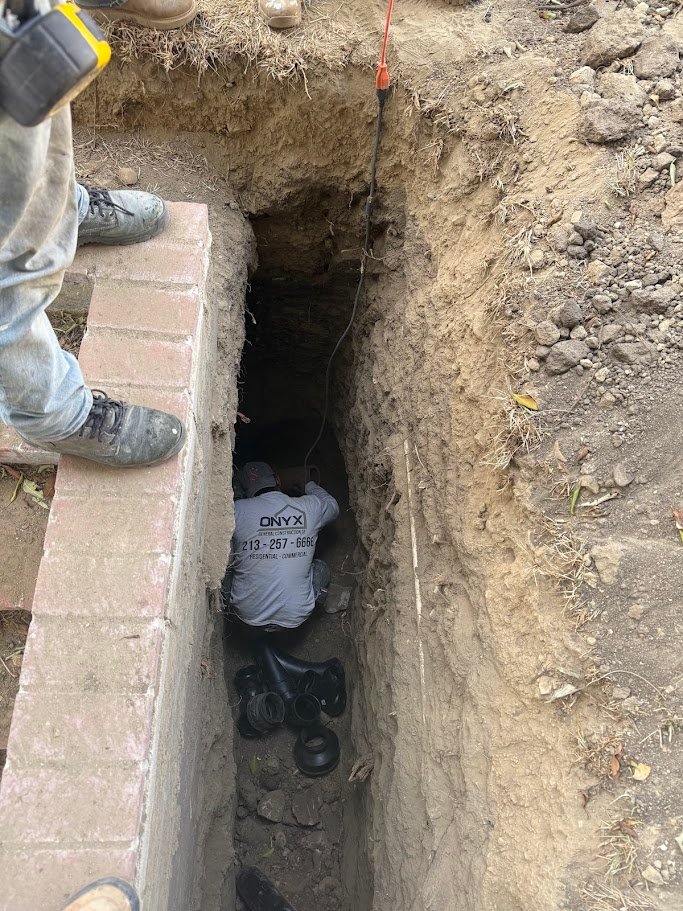
Underground plumbing rough-in for an ADU in Los Angeles.
System routing needs to stay coordinated before walls close.
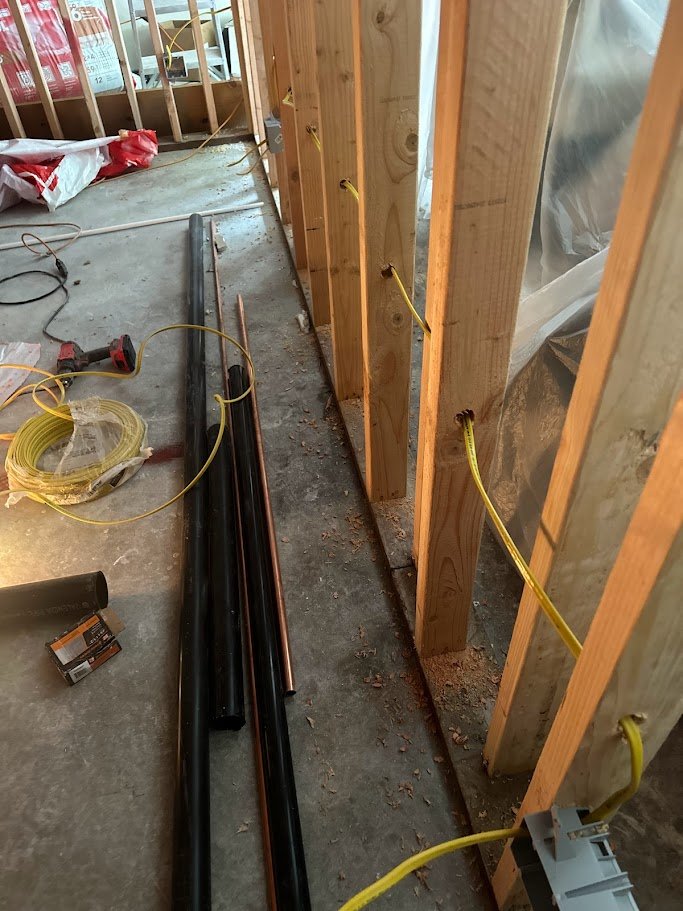
Electrical rough-in work on a Los Angeles home addition.
Electrical layout influences convenience, lighting, and clean millwork later.
6
Plumbing, Electrical, HVAC & Mechanical

The hidden systems that make the building livable

A great finish package cannot rescue a messy rough-in.

Plumbing supply and waste, electrical runs and panels, low-voltage wiring, HVAC ducting, venting, exhaust systems, and equipment planning all live here. This phase often carries a major share of the budget because almost everything essential to comfort and code compliance is being set before the walls are closed.

On Los Angeles remodels, additions, and ADUs, rough coordination is where a lot of avoidable rework either gets prevented or invited. Clean routing, correct depths, organized penetrations, and alignment with cabinetry, lighting, and plumbing fixtures are what let the finish stages move without compromise.
Typical schedule share 15%–20% of total project duration
Typical cost range 20%–30% of the construction budget
Inspection checkpoint Rough plumbing, electrical, and mechanical sign-offs
Risk points Coordination clashes, missed drops, and late layout changes
Ceiling rough electrical work during a Los Angeles remodel.
Ceiling pathways tell you a lot about field coordination.
Sewer line replacement work on a Los Angeles residential project.
Underground systems can shift both scope and schedule quickly.
Rough plumbing and rough electrical installed together in Los Angeles.
Good rough work keeps the later trades from fighting each other.
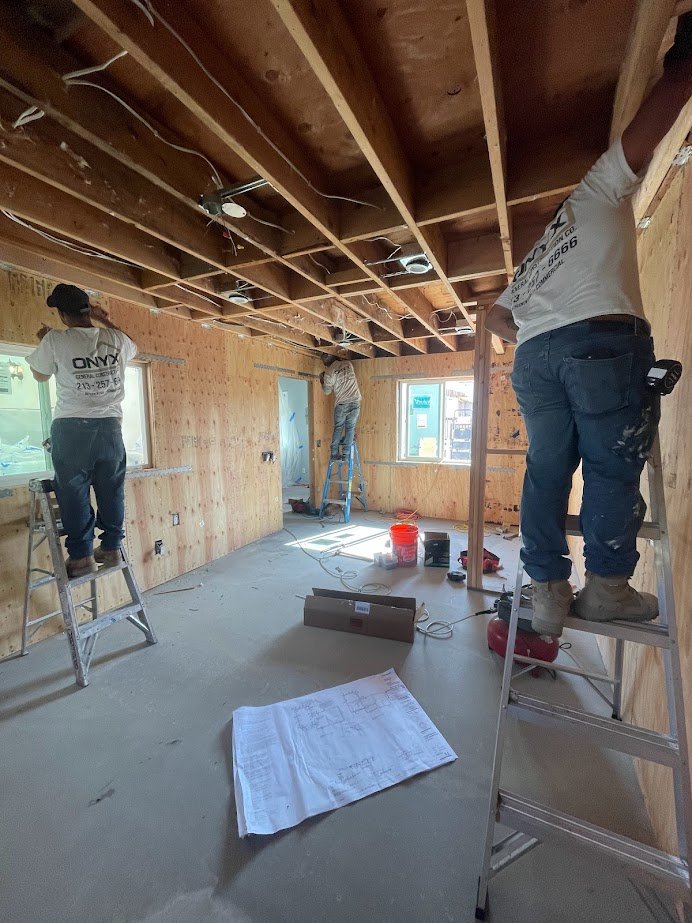
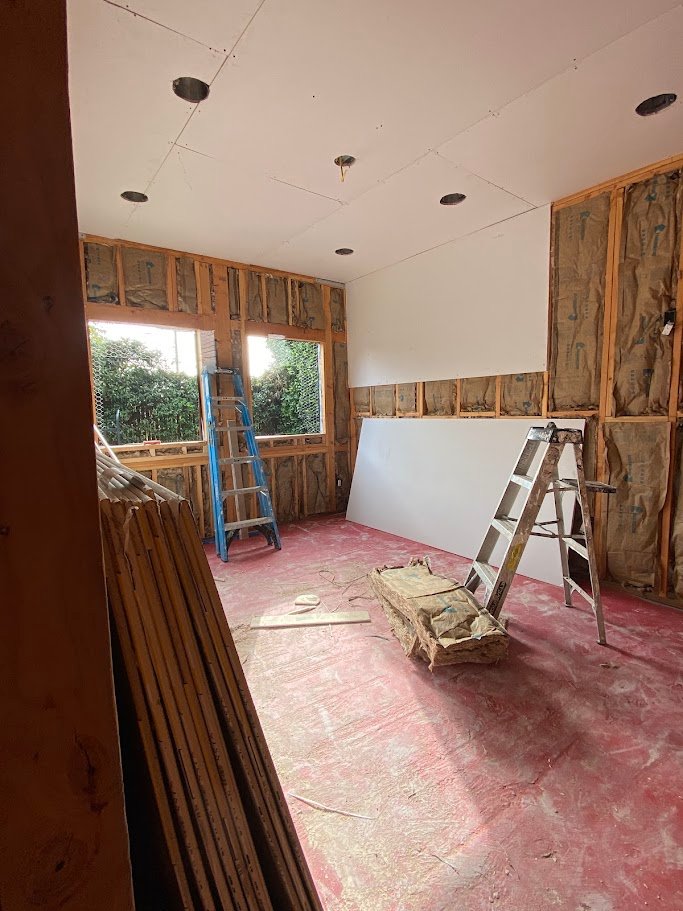
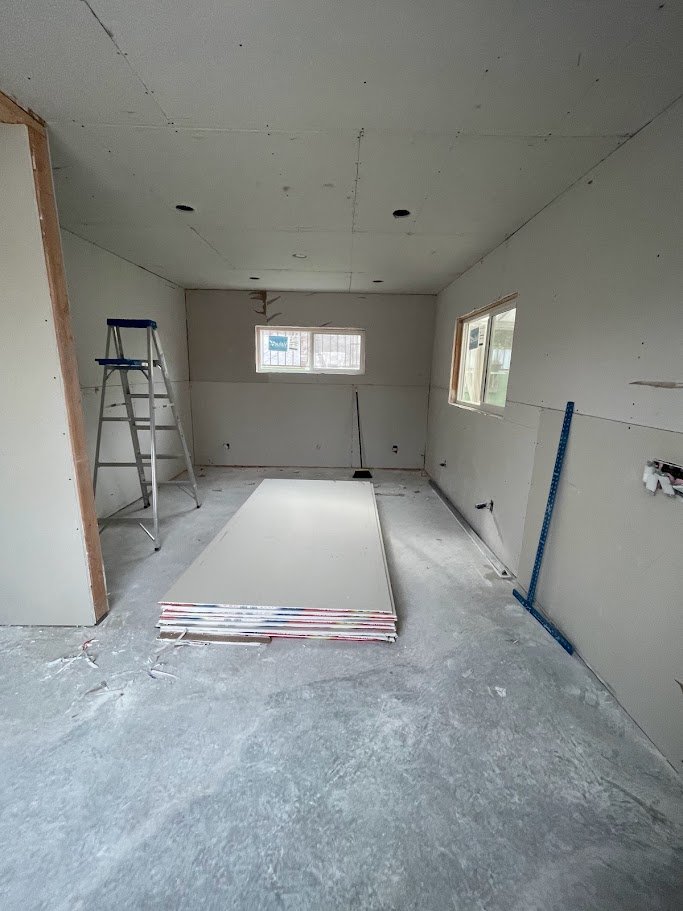
Insulation and drywall preparation inside a Los Angeles ADU.
Insulation shifts the project from structure toward comfort.
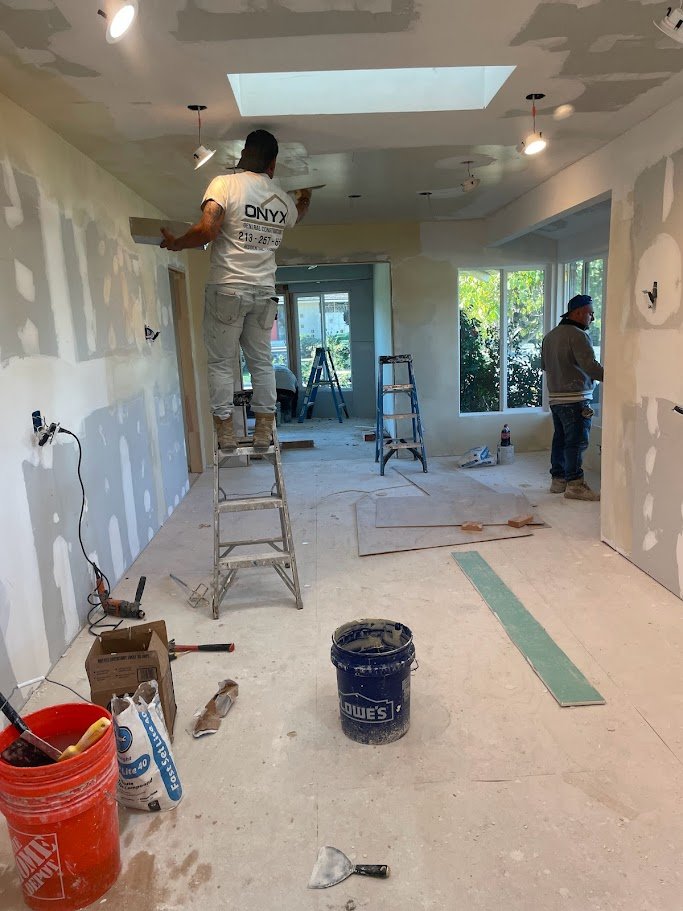
Drywall installation underway on a Los Angeles project.
Board placement starts to define finished room planes.
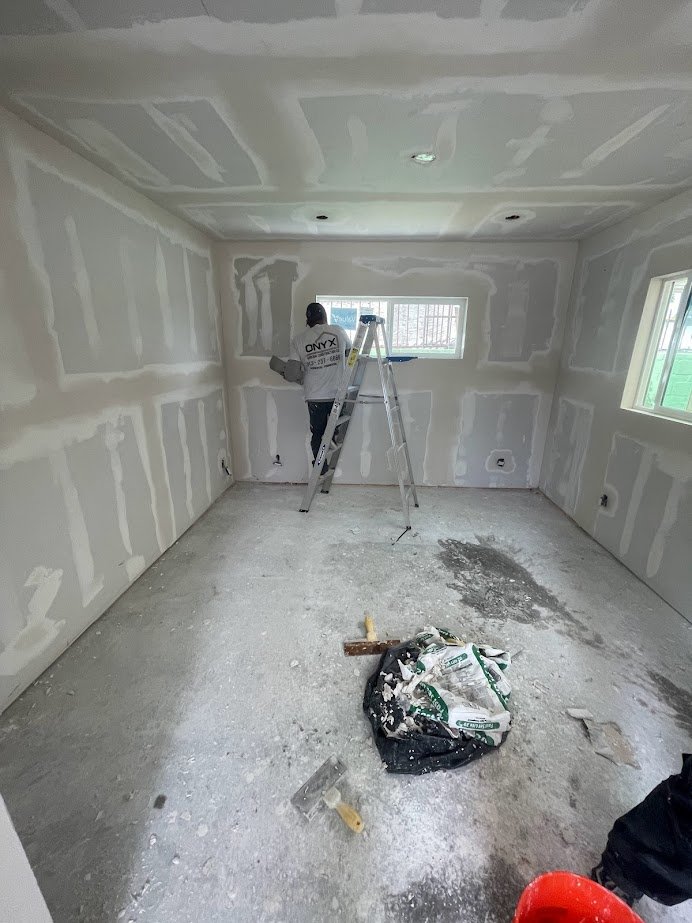
Bedroom drywall installation by a Los Angeles contractor.
The project begins to feel quieter and more architectural.
7
Insulation & Drywall

Where the structure starts feeling like rooms

This phase changes the emotional read of the project almost overnight.

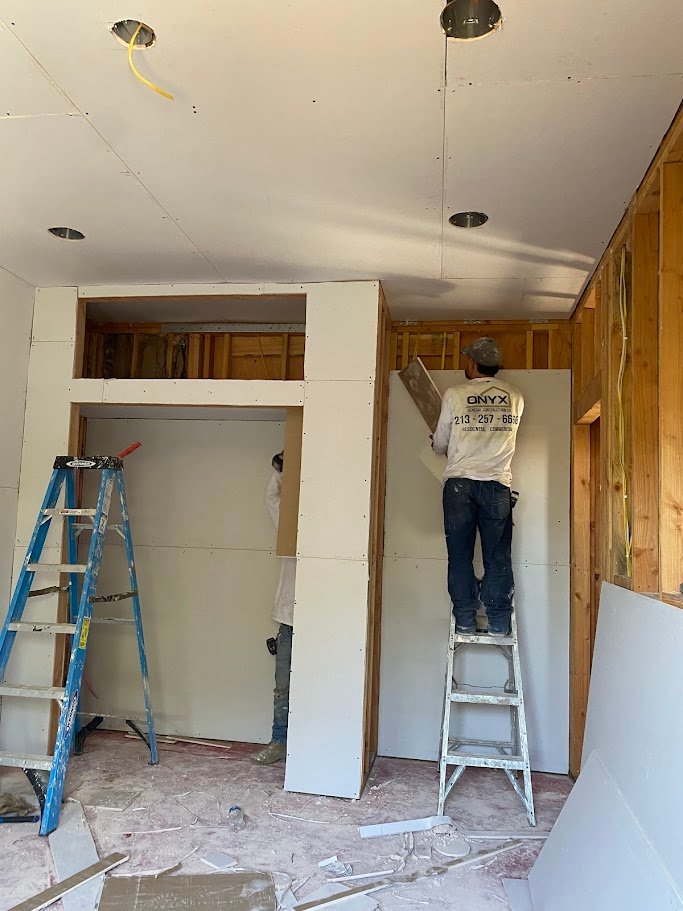
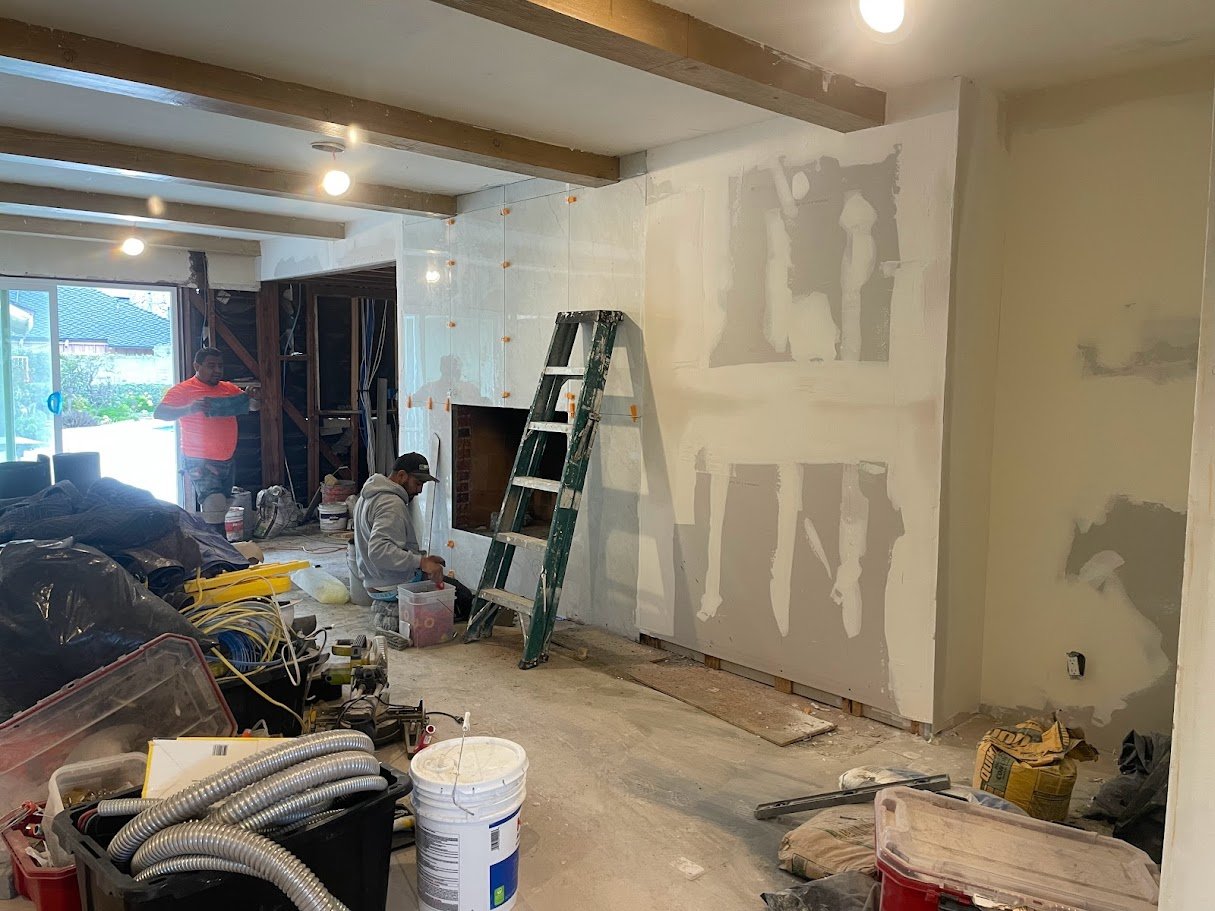
Insulation shapes acoustic control, temperature performance, and energy behavior, while drywall creates the final planes that every finish will depend on. Straight corners, calm surfaces, consistent reveals, and careful transitions are not cosmetic details. They are the groundwork for how refined the completed home will feel.

Homeowners usually experience this as one of the biggest psychological shifts in the entire sequence. Once framing disappears and room boundaries become smooth, the jobsite finally starts to resemble the home they pictured at the beginning.
Typical schedule share 10%–15% of total project duration
Typical cost range 8%–12% for insulation, board, and finishing
Inspection checkpoint Insulation approval before drywall close-up
Risk points Missed cavities, weak prep, and visible finish defects later
Closet framing and drywall in a Los Angeles home addition.
Smaller spaces reveal finish precision quickly.
Fireplace wall drywall and tile preparation in Los Angeles.
Feature walls need accurate substrates before any cladding begins.
ADU drywall installation during Los Angeles interior construction.
Drywall quality is what later makes paint feel calm rather than busy.
Flooring detail
Wood, tile, or other finish floors change the pace of the interior.
Door alignment
Interior doors, casings, and reveals start to refine the shell.
8
Flooring, Interior Doors & Molding

Character begins to show up underfoot and at every opening

The house starts reading less like a build and more like a residence.

Once the shell is straight and the walls are finished, flooring, interior doors, casings, baseboards, and trim details bring precision into everyday sightlines. Thresholds, door swings, hardware clearances, and molding reveals all need to feel quiet and resolved.

This phase also calls for protection discipline. Fresh floors and trim should never feel exposed to careless downstream traffic. The craftsmanship matters, but so does the way the site treats finished work once it is installed.

Typical schedule share 10%–15% of total project duration
Typical cost range 10%–18% depending on material selections
Owner focus Alignment, threshold transitions, and finish protection
Risk points Damage from active trades and inconsistent trim reveals
Trim sequence
Baseboards and casings tighten the visual rhythm of the rooms.
Protected finish
New finish work should be treated as complete the moment it lands.
Shower slope
Water management begins before a single tile is set.
Tile layout
The best tile work reads intentional from the first joint.
9
Cement Float & Bathroom Tile

Performance first, precision immediately after

Bathrooms only feel luxurious when the technical work is already correct.

Cement float, waterproofing preparation, slope to drain, niche detailing, edge conditions, grout alignment, and layout control all come together in this phase. Great tile work is not just about the surface. It is about the membrane logic and substrate discipline below it.

On higher-end homes in Brentwood, West Hollywood, Pacific Palisades, and Hancock Park, owners often judge finish quality in bathrooms first. That makes this one of the clearest places where technical competence and visual restraint need to meet.

Typical schedule share 8%–12% of total project duration
Typical cost range 10%–18% depending on tile and detailing
Inspection checkpoint Shower pan or waterproofing sign-off before finish tile
Risk points Improper slope, membrane failure, or weak edge alignment
Niche detail
Small wet-area details usually separate average work from excellent work.
Mitered edge
Refined tile reads quiet because the prep work is exact.
Cabinet install
Millwork is where the design starts looking fully intentional.
Countertop set
Stone and fixture coordination has to feel measured, not forced.
10
Cabinets, Counters & Finish Fixtures

Where the daily function of the home becomes visible

This is often the stage homeowners remember most clearly.

Cabinet installation, countertop templating and setting, plumbing trims, appliances, mirrors, lighting, and bath fixtures all define how the home will actually be used. Alignment, reveal control, appliance integration, and damage prevention matter as much as the materials themselves.

The visual payoff is obvious, but the schedule pressure is real. Long-lead millwork, countertop fabrication timing, and finish fixture coordination can all disrupt the closeout sequence if they are not planned early enough.

Typical schedule share 10%–15% of total project duration
Typical cost range 15%–25% for millwork, counters, and fixtures
Owner focus Reveal consistency, hardware logic, and appliance fit
Risk points Lead times, backorders, and damage during final handling
Fixture trim
The room starts reading as complete once the functional pieces arrive.
Appliance fit
Finish-stage coordination is visible in every junction and clearance.
Masking & prep
Paint quality is mostly decided before the finish coat goes on.
Final sheen
Light reveals every flaw, which is why prep cannot be rushed.
11
Paint Application

The final surface tells the truth about everything before it

Paint does not hide weak work. It exposes it.

Caulking, patching, sanding, priming, masking, cut lines, and final sheen all come together in the last visible layer of the build. Crisp paint only happens when the framing, rough-ins, substrate prep, and drywall work underneath it were done with care.

This is the phase where a home in Santa Monica, Los Feliz, Brentwood, or Encino begins to feel truly calm and finished. It is also the stage that most clearly separates rushed closeouts from projects that were carried through with consistency all the way to the end.

Typical schedule share 8%–12% of total project duration
Typical cost range 5%–10% depending on scope and detail
Owner focus Surface calm, cut-line sharpness, and final touch-up quality
Risk points Rushed prep, visible defects, and weak punch-list closeout
Wall finish
Paint is where every earlier decision becomes fully visible.
Punch detail
Final quality lives in the last refinements, not just the first coat.
Construction FAQ

Questions homeowners usually ask once they see the sequence clearly

The same themes come up on projects throughout Los Angeles: where schedule risk lives, which inspections matter most, and why early-phase discipline has so much influence on the finished rooms.

What phase usually creates the biggest schedule shifts in a Los Angeles remodel or addition?

Schedule movement usually shows up earliest, during demolition, foundation work, and rough-trade coordination. Hidden conditions, utility conflicts, structural revisions, and inspection timing tend to affect the calendar more than the finish phases.

When does a project start feeling less like a jobsite and more like a home?

Most owners feel that change in two waves. Framing makes the space understandable for the first time, then insulation and drywall make it feel architectural instead of skeletal.

Why are rough plumbing, electrical, and HVAC such a major budget category?

Because those systems are what make the building livable and code-compliant. In additions, ADUs, and full remodels, the rough phase often carries substantial labor, material, inspection, and coordination costs before any visible finishes go in.

What inspections matter most before walls are closed?

Foundation approvals, framing sign-offs, and rough plumbing, electrical, and mechanical inspections are the key checkpoints before insulation and drywall. They confirm that structural and system work is approved before it becomes concealed.

Why does finish quality depend so much on earlier phases?

Paint, tile, trim, doors, and cabinetry reveal the accuracy of everything below them. Straight framing, disciplined rough-ins, calm drywall surfaces, and correct substrate prep are what allow the finished home to feel refined.

Is the process different for an ADU, home addition, or full remodel?

The sequence is similar, but the emphasis shifts. ADUs often carry tight footprint coordination, additions require careful tie-ins to existing structure, and full remodels tend to expose the most hidden conditions during early demolition and rough-trade work.

Based in Los Angeles: ADU, Home Addition, and Remodeling General Contractor