4-Unit Development Economics
A disciplined four-unit project on the Westside succeeds long before framing starts. The land basis, the zoning read, the floor plan efficiency, the financing structure, and the exit logic all have to agree with one another from the first pass.
A fourplex is small enough to stay nimble and large enough to behave like real income property
In Culver City, that middle ground is the attraction. A well-shaped lot can support a boutique multifamily asset that feels residential in scale, leases against strong Westside demand, and still offers several refinance or disposition paths once the building is stabilized.
Why this product type stays relevant
The best four-unit projects do not compete by size. They compete through efficiency, livability, and restraint. They are easier to position, easier to understand, and often easier to exit than a larger apartment deal that needs more capital, more entitlement exposure, and a narrower buyer pool.
What the economics respond to first
The first variables that matter are simple: what you paid for the dirt, how much rentable or sellable value the envelope can actually support, and how early the construction team was brought into the conversation. The rest is refinement.
Important note on the numbers
The figures on this page are presented as an illustrative underwriting framework rather than a quote, appraisal, rent guarantee, or lending offer. Actual land pricing, zoning interpretation, utility conditions, construction cost, debt terms, and rent performance vary by parcel and timing.
Westside demand supports smaller, better-positioned housing
Culver City sits in a durable rental conversation with Palms, Mar Vista, West Los Angeles, Playa Vista, and Venice. For a small developer, that matters because the submarket does not rely on one story alone. It draws from work, commute practicality, schools, neighborhood identity, and a preference for buildings that feel more intimate than a large complex.
What helps a new four-unit building lease well
- Simple, daylight-friendly floor plans that feel larger than their square footage.
- Parking and access that feel straightforward rather than compromised.
- A unit mix that responds to Westside households, not just pro forma theory.
- Exterior materials and detailing that look restrained, current, and durable.
The strongest sites are rarely dramatic
A clean, rectangular parcel with predictable setbacks and ordinary utility conditions is usually more valuable than a flashy but difficult lot. Small multifamily economics are strongest when the site lets the building stay simple.
Lot geometry
A site with workable width and a straightforward footprint usually protects both design efficiency and construction sequencing.
Planning fit
The parcel has to support the envelope with enough discipline that parking, stairs, privacy, and open space do not fight one another.
Utility realism
Early confirmation of service upgrades, laterals, and site access matters more here than on paper-heavy concept decks.
Neighborhood rhythm
The project should feel like a strong infill response to the block, not an overforced building trying to do too much.
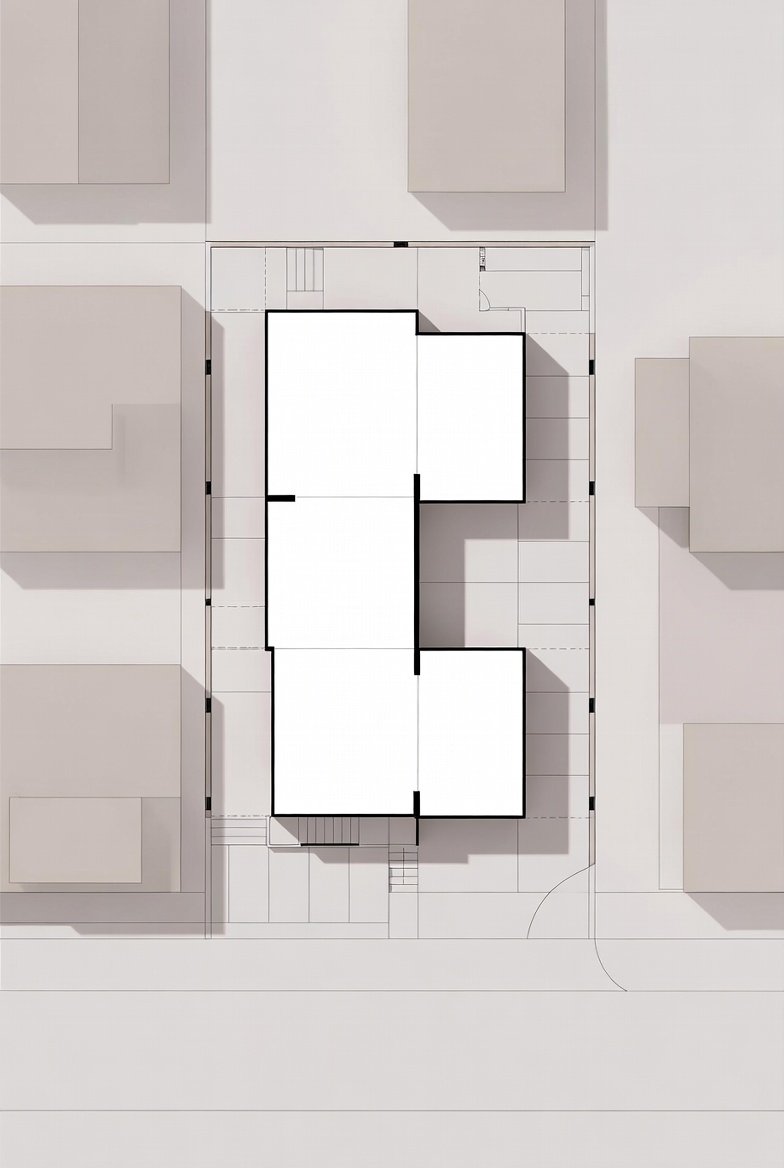
The envelope has to produce livable units, not just theoretical square footage
The entitlement conversation is only useful when it translates into a building people would actually want to occupy. On a four-unit development, the difference between workable and awkward often comes down to circulation, window placement, storage, and how intelligently the structure stacks.
What the early massing should confirm
Setbacks, height, privacy relationships, parking logic, stair placement, and whether the floor plate supports a clean repeatable unit strategy.
What it should avoid
Forced layouts, fragmented structure, too many corner conditions, and façade moves that look expensive without improving rentability or value.
A clear framework for basis, build cost, rent, and valuation
The attraction of a Culver City fourplex is not that the numbers are magical. It is that the project can be understood with clarity. A clean capital stack and a conservative operating view usually tell you quickly whether the deal deserves to move forward.
The project works best when debt and equity stay ordinary
A good four-unit deal rarely needs a heroic capital structure. Simpler financing keeps the project understandable, keeps reserve planning cleaner, and makes the transition from construction to stabilized debt easier to manage.
Typical structure
- Construction financing sized to a disciplined loan-to-cost position.
- Equity covering the balance, along with contingency and interest reserve discipline.
- A refinance path or sale thesis defined before permit, not invented after completion.
Why the exit matters early
Because four-unit properties can appeal to investors, owner-users, and refinance lenders, the eventual exit path should inform the layout, finish strategy, and parking decisions from the beginning. The design should support the audience that will ultimately value it.
Small projects benefit most when the builder is present before the drawings harden
On a project with four units, there is very little room for elegant mistakes. A design-build process protects the economics by aligning architecture, structure, cost, and field logic while the project is still flexible enough to improve.
Read the lot correctly
Start with the real envelope, not the optimistic one, and establish what the site can carry without forcing the plan.
Shape the unit mix
Lay out the building around livability, daylight, and efficient structure instead of chasing decorative complexity.
Budget in parallel
Run early budget feedback beside the drawings so the project reaches permit with fewer surprises and fewer redraws.
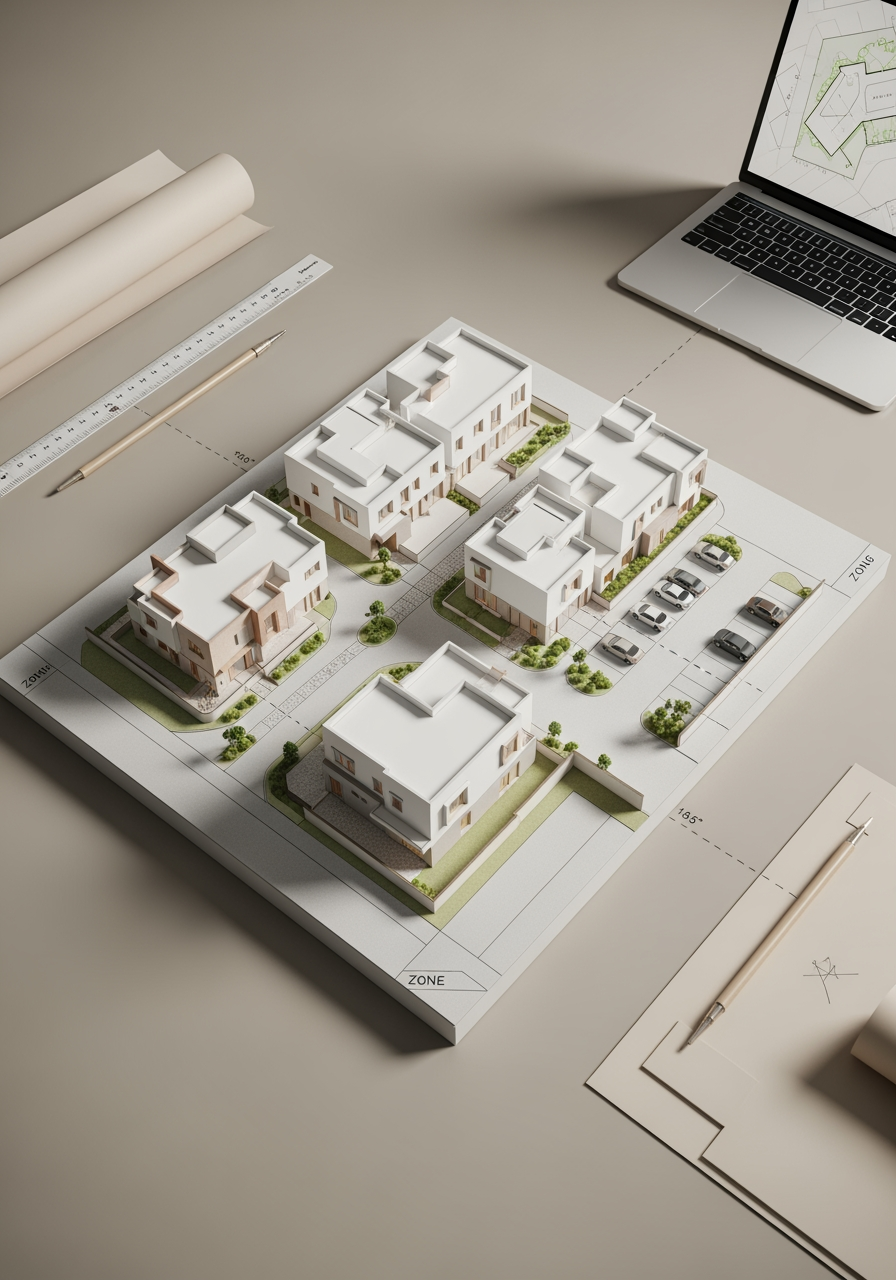
The schedule is short enough to move and long enough to punish drift
A small infill project feels manageable because it is not a tower. It still carries enough moving parts that any hesitation in design, approvals, procurement, or field sequencing shows up quickly in holding cost and opportunity cost.

What gives the finished asset its flexibility
A finished four-unit building can speak to more than one audience. That is one of its quiet advantages. Depending on market timing and borrower profile, the project may support a long-term hold, a refinance into stabilized debt, or a sale to a buyer who values new small-scale multifamily in a Westside location.
Hold strategy
Keep the asset, refinance responsibly, and lean on durable rental demand, new systems, and lower immediate capital expenditure pressure.
Disposition strategy
Position the building as clean new product with strong livability, broad appeal, and a scale that many buyers still understand intuitively.
The project usually goes wrong in ordinary ways
Small multifamily rarely fails because of one dramatic event. It usually slips because the land was bought too hard, the plan tried to do too much, utilities were not understood early enough, or rents were modeled like marketing copy instead of operating reality.
What to protect first
- Disciplined site basis and acquisition terms.
- Clear design intent that survives budgeting.
- Early coordination on utilities, access, and consultant scope.
- Contingency that reflects actual field risk.
What conservative underwriting looks like
Conservative underwriting assumes a little friction. It leaves room for plan check revisions, a tighter leasing environment, or cost movement without turning the whole deal fragile. The purpose is not to make the project look exciting. It is to make the project survivable.
Questions owners and developers usually ask first
Before the drawings advance, the real questions are almost always the same: does the lot support the idea, does the capital stack stay sane, and does the finished building have a believable path to value.
It can be, especially when the land basis is disciplined and the project is not relying on stretched rent assumptions to work.
A lot with clean geometry, manageable access, predictable setbacks, and no unusual utility surprises is usually the strongest starting point.
Because small projects absorb mistakes quickly. Early builder input helps keep structure, cost, schedule, and livability aligned.
In many cases it can, which is one reason the product type remains strategically interesting after construction is complete.
Overpaying for the site, forcing the design, and underwriting as though every variable will break in your favor.
Clear layout, good natural light, durable systems, restrained exterior expression, and a scale that remains appealing to more than one buyer type.