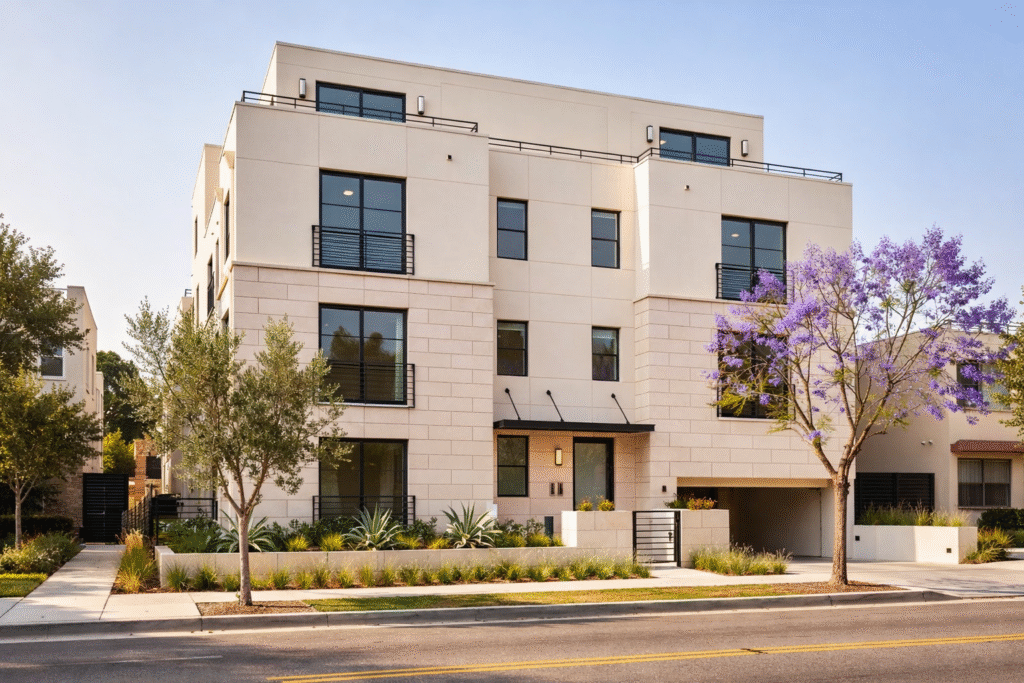
A stronger building without starting over.
Some properties do not need to be replaced. They need to be clarified. A major exterior renovation can take an aging residential building and turn it into something sharper, more current, and more valuable through better facade composition, entry hierarchy, material restraint, lighting, and landscape framing.
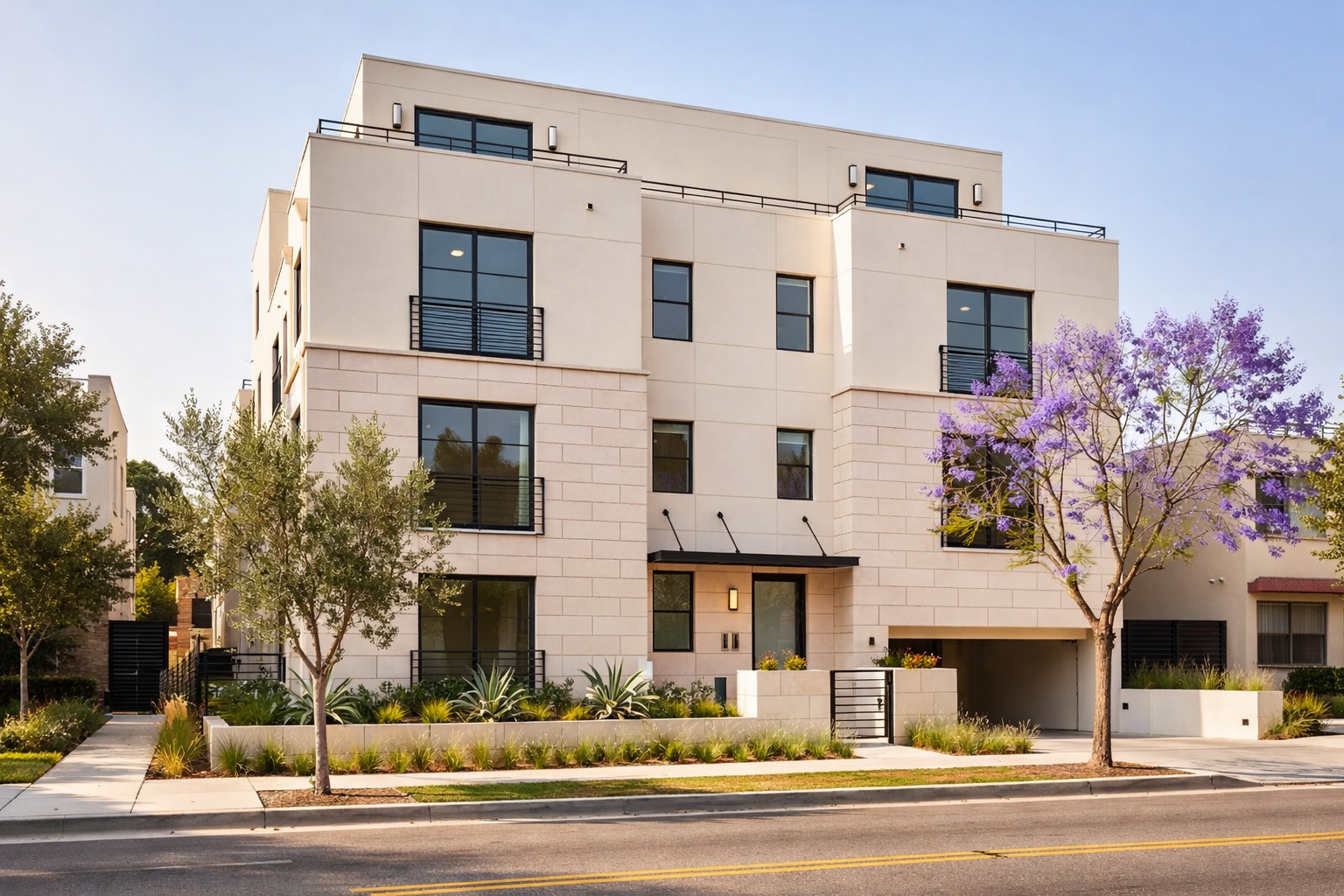
A major exterior renovation in Los Angeles is often the smartest move for owners who know the property has more potential than it currently shows. The building may already be well located. The unit mix may already work. The issue is not the basic real estate. The issue is perception, coherence, and how the property presents itself from the street.
Why some buildings need repositioning, not replacement
There are many existing residential buildings across Los Angeles that feel dated, flat, or visually unresolved even when the underlying asset is strong. The proportions may be serviceable. The structure may still make sense. But the exterior image no longer matches the value of the location or the expectations of the surrounding neighborhood. That is where a thoughtful building uplift comes in.
Instead of treating the work as a patchwork of isolated updates, the better approach is to see the property as one complete composition. The facade, the windows, the entry, the landscaping, the lighting, and the material palette all need to support the same idea. That is what separates a true repositioning from a cosmetic touch-up.
What actually changes the way a property is perceived
Owners sometimes assume the answer is simply new paint or one upgraded finish. In reality, the biggest visual shift usually comes from a few coordinated moves working together. Cleaner massing expression. Better contrast between upper and lower levels. A more legible front door and arrival sequence. Windows that read with greater precision. Lighting that gives the building presence after sunset rather than leaving it flat and anonymous.
Landscaping matters just as much. A refined planting palette can soften the base of the building, frame the architecture, and make the property feel intentional instead of leftover. When the exterior, hardscape, and planting strategy are aligned, the whole project reads as higher quality before anyone even steps inside.
Why this matters in central Los Angeles neighborhoods
This kind of work carries particular weight in design-sensitive areas such as Beverly Grove, Pico-Robertson, Carthay, Miracle Mile, and other central Los Angeles residential corridors where buildings compete visually block by block. On these streets, a tired facade is not just an aesthetic issue. It can weaken the entire impression of the property.
A more resolved exterior does the opposite. It helps the building sit more comfortably within the neighborhood while also feeling more premium, more current, and more credible to buyers, tenants, and visitors. In streetscapes where visual quality is immediately noticeable, exterior modernization has real influence.
Where owners lose momentum on uplift projects
The most common mistake is piecemeal thinking. A new gate gets added, but the entry sequence still feels weak. The landscaping is improved, but the facade material palette still feels cheap. Lighting is installed, but it is not coordinated with the architecture. Each choice may be acceptable on its own, yet the building still fails to read as a finished whole.
Another mistake is overcorrecting with too many gestures. Too many materials, too much contrast, too many features, or too much styling can make the property feel forced. The strongest exterior renovations usually rely on restraint. A limited palette. Clean transitions. A clear hierarchy between the base, the body, and the entry. Enough detail to feel premium, but not so much that the building loses composure.
How Onyx approaches a major exterior renovation
At Onyx General Construction, we approach building uplift as a design-build problem, not a checklist of disconnected upgrades. The goal is to understand what the property should become visually, then make every construction decision reinforce that direction. That often means refining the facade, clarifying the arrival experience, strengthening the relationship between structure and landscape, and using materials with more discipline.
We also look closely at execution sequence. Exterior modernization only works when details are carried through with consistency. That includes finish transitions, lighting locations, planting edges, metalwork, and the way the entry experience meets the sidewalk. A better property image comes from a hundred small decisions aligning, not from one dramatic move alone.
Who this type of project fits best
Major exterior renovation is a strong strategy for townhome buildings, smaller multifamily properties, condo buildings, apartment exteriors, and mixed residential properties that have solid underlying value but need a sharper identity. It is especially useful when an owner wants the building to feel more current, more premium, and better matched to the surrounding neighborhood without stepping into a full redevelopment path.
Done well, this kind of uplift changes more than the facade. It changes the confidence of the property. It improves first impressions, strengthens market perception, and gives the building a more resolved place on the street.
The upgrades that usually move the needle most
Exterior modernization works best when the project prioritizes the few moves that affect perception immediately.
Refine the base and body
A stronger relationship between lower and upper levels gives the building more composure. The right facade language can make a property feel grounded, cleaner, and materially more premium.
Clarify arrival
The entry sequence is often where older buildings feel weakest. Better hierarchy, lighting, and gate or door composition can completely change the first impression.
Frame the architecture
Landscaping should not feel decorative and separate. It should support the massing, soften the base, and make the building feel deliberate from sidewalk to door.
What owners usually get wrong early
Most weak renovation outcomes begin with fragmented decision-making rather than a bad building.
Too many isolated upgrades
New paint, new lighting, or new planting can all help, but none of them can carry the whole project by themselves. Without a unified direction, the building still feels unresolved even after money is spent.
One visual idea carried through the whole exterior
The strongest results come from committing early to a cohesive material palette, entry strategy, lighting plan, and landscape language so every visible decision reinforces the same identity.
How Onyx carries a building uplift from concept to execution
Exterior repositioning depends on discipline. The construction has to protect the design idea all the way through the finish line.
Study the existing building honestly
We identify what already works, what feels dated, and what needs to change to give the property a cleaner and more premium identity.
Set the new exterior language
Material hierarchy, facade expression, entry design, lighting, metalwork, and planting are aligned before the work starts drifting into piecemeal decisions.
Sequence the renovation practically
Good uplift projects need realistic sequencing so demolition, finish installation, exterior detailing, and site work reinforce each other instead of creating rework.
Finish with consistency
The final result depends on restraint and follow-through, with clean details, disciplined materials, and a fully resolved street-facing presence.
Where this kind of property uplift usually fits best
Existing residential assets with good location, workable building bones, and under-realized street presence tend to benefit most from a major exterior renovation. That includes properties in Beverly Grove, Pico-Robertson, Carthay, Miracle Mile, West Hollywood-adjacent streets, and other central Los Angeles neighborhoods where presentation matters immediately.
Questions owners ask before starting a building uplift
These are usually the early questions that determine whether the renovation reads as a real repositioning or just another surface update.
A major exterior renovation improves and repositions an existing building rather than replacing it from the ground up. The goal is to sharpen street presence, upgrade the facade, improve the entry experience, and create a more premium, cohesive property without starting over entirely.
The biggest improvements usually come from a coordinated approach rather than one isolated change. Facade cleanup, stronger material contrast, better window and door expression, a clearer entry sequence, architectural lighting, and disciplined landscaping usually create the strongest before-and-after result.
Yes. A property can feel substantially more valuable when the exterior is better resolved and the overall image of the building changes. Buyers, tenants, and neighbors respond to curb appeal, material quality, lighting, and the sense that the property has been thoughtfully improved.
They are especially effective in design-sensitive neighborhoods and central Los Angeles corridors where buildings compete visually block by block. Areas such as Beverly Grove, Pico-Robertson, Carthay, Miracle Mile, and nearby residential streets often benefit from thoughtful exterior repositioning.